Apocalypse Now

Apocalypse Now/Apocalypse Now: Redux (1979/2001)

Dir. Francis Ford Coppola

Written by: John Milius, Francis Ford Coppola, Michael Herr (from the novel Heart of Darkness by Joseph Conrad)

Starring: Martin Sheen, Larry Fishburne, Frederic Forrest, Robert Duvall, Marlon Brando

This review is going to be a bit different, because I’m going to be writing a lot less about Apocalypse Now as a film, and a lot more about its presentation as a DVD, and about my experience with collecting DVDs in the early-to-mid 2000s in general. As I’ve mentioned before, those years when I was in high school and, to a lesser extent, early college, much of my disposable income was spent on building my DVD collection. The portability, special features, and relative low cost compared to VHS made collecting DVDs fun and easy. Though we know now that it isn’t true, it seemed, at the time, that this format would last forever, the discs not being subject to the same kinds of physical degradation that tapes could suffer from. DVD was sold as a format for serious film viewers and collectors, people who would be interested in listening to multiple full-length commentary tracks from directors and stars, people who wanted to see the footage that was left on the cutting room floor. DVD took the promise of Laser Disc and made it affordable and convenient for the masses. I bought in completely, and I often sought out “Special Edition” discs that contained hours of extra footage and bonuses about the movie. My copy of Apocalypse Now is just such a set.

The “Complete Dossier” collector’s edition of Apocalypse Now was released in November 2001, and was one of the first DVDs I added to my collection. It marked the first home video release of Coppola’s full cut of the film, entitled Apocalypse Now: Redux, which premiered at Cannes earlier that year. The set includes both the original cut of the film and Coppola’s director’s cut, which adds nearly an hour of extra footage to the film, spread out over two discs. It also contains a third disc with hours of special features, commentaries, and behind the scenes photographs and films. All of this is neatly packaged in a trifold case featuring stills from the film, and then inserted into a beige slip case, meant to mimic the look of the confidential file on Colonel Kurtz (Brando) that Captain Willard (Sheen) carries with him. The packaging is fantastic, and makes this collector’s set feel essential. The amount of material contained on the set’s three discs is overwhelming. Watching both cuts of the film would take up just under six hours, and the additional supplemental features could comprise an additional feature-length making of documentary if they weren’t broken up into bite-size pieces. Overall, it’s a great set.

Apocalypse Now 1

Over the years, as streaming has become most people’s preferred method of media consumption, disc formats have become less and less extravagant. With the exception of boutique lines, such as the Criterion Collection, which are aimed at serious film nerds, physical copies of films are now often rushed to market with little fanfare, and precious fewer special features. Retailers are stocking fewer discs in store and the shelves are dominated by cheaply packaged new releases, aimed to make a quick buck off the folks who will come to pick up a physical release on day one, before they ultimately meet their end in a bargain bin. Gone are the days when a movie like Fight Club could become a cult classic based on its second life in DVD sales. In a post-Netflix, post-YouTube world, there is little need to own physical media. Behind the scenes footage is now the stuff of viral marketing campaigns, directors can provide commentary about the making of their films directly to the audience through a podcast or a Twitter feed. Though streaming may not have the fidelity of a BluRay disc, it can compare to any DVD, and is far more convenient. I can’t blame anyone for ditching physical media altogether, but, as is probably painfully obvious to this point, I still have a strong nostalgic attachment to these discs. The promise of insider’s knowledge that a good DVD set offered to me in 2001 is still something that I relish.

I can remember the first movie that I ever watched on DVD. It was the summer of 2001, and my family was visiting my grandparents in Upstate New York. At that time they had a cabin on a lake and for several years in a row, my family and my cousins, aunts, and uncles would vacation at the lake and stay at my grandparents’ cabin. During the day we would go out on the lake, swimming, fishing, or sit out and read, but at night time, there wasn’t much for us kids to do. We’d play cards or watch the Yankees game, but we never watched movies because the only tape I remember my grandparents owning was Doctor Zhivago. That changed in the summer of 2001. That summer, my cousin brought a PlayStation 2 with him to the cabin, and a stack of discs. I had heard about DVD as a new format of home video that would soon supplant VHS as the dominant video medium of the time, but the first time I’d ever experienced watching one was when he popped in Ghostbusters and I and my family gathered around to watch the movie, followed by nearly an hour of deleted scenes. I had seen the movie dozens of times by that point, but this viewing experience was like opening up a treasure trove of information about one of my favorite films. Immediately, I started scheming on ways to acquire a DVD player of my own.

Apocalypse Now 7

Later that year, my sister and I made that goal a reality as we pooled our financial resources and bought a PlayStation 2, and I started to use the money I made at my first part time job building up a collection of movies, both new and classic. I remember fondly some of the first titles that I picked up: Monty Python & the Holy Grail, The Matrix, A.I., Fight Club, and, of course, my own copy of Ghostbusters. As I mentioned before, in its earliest stages as a home video format DVD was truly aimed at collectors and cinephiles, and these discs were all bursting at the seams with special features, commentary tracks, and deleted or extended scenes. Growing up, my family had taken frequent trips to the movie theater, and we often gathered in front of the television to watch movies that we’d taped during an HBO free preview weekend, but transitioning to DVD changed my viewing habits. I suddenly had my own movie collection, and movie nights became more of a solitary event than a family affair. I soaked up as many different stories as I could, and explored the commentary tracks and making-of documentaries included on the discs as I began my self-driven education in film.

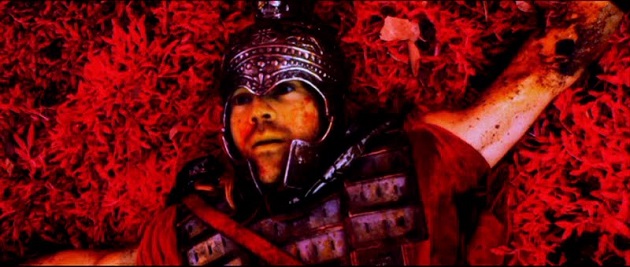
My copy of Coppola’s Viet Nam epic, Apocalypse Now, was an essential piece of that self-education. When I purchased the Apocalypse Now: Redux set sometime in early 2002, I had not yet seen the film. At that time, however, The Godfather was my favorite film, and I was eager to see more of Coppola’s work, particularly the universally revered Apocalypse Now. On initial viewings of the film, I had trouble breaking through the murky haze (both literal and figurative) that permeates the Viet Nam of the film, particularly in its extended version. Though it certainly doesn’t lack for action, Apocalypse Now shines a light on the horrors of war through revealing its characters’ reaction to increasingly dire straits. War is Hell, but in this film it is also madness, unjustly cruel and senseless. Apocalypse Now feels like a fever dream, the inscrutability of its imagery and narrative increasing as Willard traverses deeper into the jungle towards the mouth of madness personified in Kurtz. The film proceeds as a death march, following Willard and the crew of PBR Street Gang as they traverse up the Nung River into Cambodia. The river is frequently obscured by fog or smoke, a visual obfuscation that mirrors the lack of psychological clarity that these characters have in relation to their surroundings in a hellish warzone. Though Kurtz is singled out for assassination for having lost his mind and deserting, it’s clear that the war has robbed most, if not all, of these characters of some piece of their sanity.

Apocalypse Now 5

When I first saw Apocalypse Now, I had never seen a war movie that was so thematically rich and dense with meaning and symbolism. At the time, I was watching movies like The Patriot, so to engage with a movie like Apocalypse Now that presented war so cerebrally was a major shift. For much of the movie, Coppola replaces the typical spectacle and bombast of the war genre with a more insular and meditative tone. Rather than propping up nationalistic or patriotic ideologies, Coppola’s film depicts the Viet Nam war with a healthy dose of skepticism for America’s interventionist military position. Willard’s mission to assassinate Kurtz operates as a microcosm of the war at large, cloaked as it is in secrecy, and undertaken with a dubious claim to the moral high ground. In Coppola’s vision of war, there are no clear winners or losers, only survivors, and even they seem to have been irreparably damaged by their experiences. Where a film like Saving Private Ryan (which I enjoy, and which is one of the great war films) presents the viewer with a tidy moralistic view of war, in which saving one man can somehow make up for the deaths of so many others, Apocalypse Now presents war as a scenario that brings out the basest, most animalistic instincts in men, and in which no one can expect to be redeemed. Apocalypse Now is a look into the savage, black heart of the individual and of society.

It’s always a pleasure to rewatch Apocalypse Now, which I believe to be the best movie about war ever made. The director’s cut of the film does add some interesting scenes that enhance both the strange, dreamlike quality of the film, and its anti-imperialist/anti-interventionist themes, but I typically default to watching the original cut, which is what I watched in advance of writing this post. One could teach a master class on film style with this movie. Form and content match as the film’s pace ebbs and flows like a river, the languid, dreamy scenes aboard PBR Street Gang intercut with flashes of brutal action, such as the arrow attack that kills Chief (Albert Hall). The lighting is perfect, particularly towards the film’s end, with Coppola often presenting Willard and Kurtz in total silhouette, or obscuring their faces with shadow, to reflect that darkness that they both share within. The acting is both naturalistic and inspired, from the leads down to supporting characters like Mr. Clean (a 15-year-old Fishburne) and Chef (Forrest), two members of the crew, and the unforgettable Colonel Kilgore (Duvall). The characters feel lived in and fleshed out regardless of how much screen time they get, with Brando’s performance as the mad Colonel Kurtz standing as one of his best, despite not appearing in the film until the final act. Apocalypse Now doesn’t attempt to make sense of all of the madness and horror, it simply allows it to be, challenging the viewer to respond to and reflect on it.

Apocalypse Now 3

I think that I have such admiration for Apocalypse Now because of the particular way in which I was introduced to it. While it doesn’t exactly rank up among my favorite films of all time, it’s unquestionably a great movie, and, as I said, I believe it to be the best movie about war ever made. My understanding of the film was enriched by my ability to watch it in multiple cuts and replay specific scenes, or the whole film, over and over again. I was also given a wealth of supplemental material to put the film into a greater context and provide insights into the thought processes and working methods of the people involved in the making of the film. I have become so enamored with Apocalypse Now as a result of having owned it on DVD. I’m sure that I would have greatly enjoyed seeing it, but I don’t know that if I had seen the movie in a theater or just viewed it one time at that age, it would have made quite the impression upon me that it did. Being able to engage in a deep dive with the film provided me with a relationship to it that I rarely have to films that I see now, even ones that I greatly admire or objectively like more than Apocalypse Now. This project was born of a desire to explore physical media that I own, and while I mostly like to write about the movies themselves, it’s also important to consider the physical object itself sometimes. Apocalypse Now is a great movie, but I learned to appreciate it as a great DVD set, which in turn led me to discover its greatness even more.
Animal House

Animal House (1978)

Dir. John Landis

Written by: Harold Ramis, Douglas Kenney, and Chris Miller

Starring: John Belushi, Tom Hulce, Stephen Furst, Mark Metcalf


Animal House is, without question, one of the most influential and best comedies of all time. An entire subgenre of comedy that dominates the cinema to this day was largely born from the DNA of this seminal classic. Animal House is the first film from the National Lampoon, the humor magazine that would go on to expand into a media empire throughout the 1970’s and 80’s, and it is the distillation of the brand of humor that that magazine would come to represent over its first decade of existence. The film’s creators were already stars in the niche world of underground comedy, but Animal House launched the careers of Harold Ramis and John Landis who would go on to make some of the most iconic comedies in the history of film in the next decade. It also marks the first feature film performance by the great John Belushi. All that being said, I never watch Animal House anymore, and I don’t think I have sat down to watch the whole movie in nearly two decades.

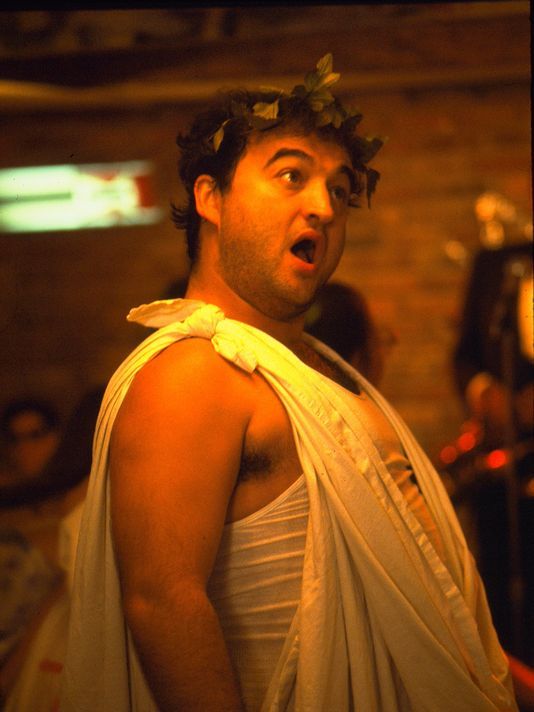
It isn’t that I ever disliked Animal House. It was a staple of a mine and my friends’ movie rotation during high school, along with other classic teen movies such as Fast Times at Ridgemont High or Say Anything. Back then I could quote the movie from memory, and I aspired to party as hard and be as cool as Bluto (Belushi) and the Deltas. I also appreciated the movie for its historical importance. I was (and am) a big fan of raunchy comedies, and I knew that without Animal House, there would be no P.C.U., Dirty Work, or Road Trip. The Deltas sticking it to the system at Faber College through partying and pranking is a familiar trope in comedy now, and Animal House may not have completely invented the format, but it certainly crystallized and advanced it. As perfect a comedy as it may be, however, Animal House loses its punch the further away from adolescence one becomes. I will never not laugh at Bluto’s impression of a zit, or at Neidermayer’s (Metcalf) over the top sadism, but I don’t ever feel the need to watch the whole movie anymore.

Animal House 1

That’s probably because, as a movie centered on adolescent hijinks, Animal House is designed to primarily appeal to a certain demographic of the general public. More than its sophomoric sense of humor, however, it’s the period setting of Animal House that I really have trouble relating to anymore. Though it came out in the late 1970s, the movie is set in 1962, when college men were expected to wear blazers and pledging a fraternity was the pinnacle of social networking. The period setting doesn’t at all hinder the humor in Animal House, which is commendable. So often, humor can be topical or not translate from one generation to the next, but Animal House could really be transposed to just about any era, largely keep the same jokes, and it would be a successful comedy. There’s just something about the film that doesn’t really resonate with me the way that it used to. I can recognize its importance in the genre, but actually sitting down and watching the film for this post was a bit of a chore. I laughed like I always have, but over the years my desire to watch a full length feature that is so focused on physical comedy and gross-out humor has diminished greatly.

For me, Animal House and films of its ilk work best in little pieces. The film is somewhat elliptical, with many scenes simply existing to highlight one joke, and I think some of the film’s best moments are just as funny when taken out of the context of the larger film. My very favorite scene in the film is the scene in which Bluto and D-Day (Bruce McGill) convince Flounder (Stephen Furst) to put Neidermayer’s horse in Dean Wormer’s (John Vernon) office. After locking the horse in the office, the three are having a laugh when D-Day hands Flounder a pistol and tells him to “finish the job.” Though he doesn’t know the gun was loaded with blanks, Flounder can’t bring himself to kill the horse, so he fires into the air. Of course, the horse drops dead of a heart attack anyway, and the reaction shot of D-Day and Bluto is priceless. Later in the film, a worker is briefly shown measuring the door to the office and measuring the space between the dead horses upturned legs before revving up a chainsaw. It’s honestly a fairly one-note joke, but the absurdity of the situation has always stuck with me and the idea of sawing a dead horse in half to get it out of an office never fails to crack me up, no matter how many times I see the scene.

Animal House 5

Animal House is full of scenes just like that one. Hilariously absurd situations and non sequiturs that don’t advance the film’s plot but provide some of the most memorable jokes and the biggest laughs. Think about Bluto casually spying on the sorority girls’ topless pillow fight and then winking at the camera, or about the record scratch moment when the Deltas walk in to the Dexter Lake Club. These are the scenes that make the film the classic that it is, so when I think back about Animal House I almost think of it more as a sketch comedy than as a feature film. Its roots in the short form satire of the National Lampoon are obvious. Undeniably, the film is a comedy classic, and as I mentioned, was hugely influential in shaping the direction of mainstream comedy filmmaking, but as a film it leaves something to be desired. Landis and Belushi would team up again in 1980 to bring Belushi and Dan Akroyd’s “Blues Brothers” characters to the big screen, in a film that works much better on the whole, for me. With Animal House, however, the whole does not always equal the sum of its parts.

American Splendor

American Splendor (2003)

Dir. Shari Springer Berman, Robert Pulcini

Written by: Shari Springer Berman & Robert Pulcini (based on the comics by Harvey Pekar)

Starring: Paul Giamatti, Hope Davis, Harvey Pekar


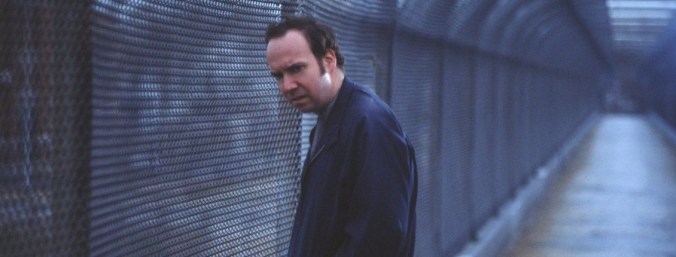
American Splendor is a biopic about the life and work of Cleveland cartoonist Harvey Pekar, the creator of the comic series of the same name. The comic “American Splendor,” which ran from 1976 to 2008, follows the mundane everyday lives of Pekar and his friends and coworkers. It contains Pekar’s musings on life and is presented in his cynical, often miserable, tone, with the illustrations being provided by some of the biggest underground cartoonists of the 70s and 80s. The film adaptation is a genre-hopping picture that presents primarily the period of Pekar’s life in which he was writing the series. It intertwines a dramatized version of Pekar’s life in which he is played by Paul Giamatti with interviews with the actual Pekar, his wife, and friends. Many scenes from the film are direct adaptations of panels from “American Splendor,” sometimes even fading in or out from the illustrated panels.

I have fond memories of this film, having seen it shortly after its release, sometime in 2004. I wasn’t familiar with the comic series at the time, but I remember liking the film’s style and being very enamored with Pekar as a character, both through his actual interviews and Giamatti’s portrayal. I identified very much his persistent negativity. The documentary aspects of the film lent the dramatized storyline veracity, and I enjoyed watching Pekar be interviewed with Giamatti sitting in the background. The film goes out of its way to highlight its construction, which was intriguing to me. I liked being able to compare Giamatti’s performance with the genuine article. I was also intrigued by Pekar’s brand of blue-collar intellectualism. I probably watched the film a half dozen times between 2004 and 2007, or so.

american-splendor-2

I was disappointed that after not having seen it in probably a decade, American Splendor didn’t live up to my memories. The film’s varied style of presenting its story, an aspect of it that I had previously enjoyed, was the primary reason for me not connecting with it this time around. Stylistically, I was fine with the introduction of animation and panels from “American Splendor” in the narrative portions of the film, but I felt that the documentary and narrative portions just didn’t mesh. I think that American Splendor works better as a documentary that it does a narrative film, and the presence of the actual Harvey Pekar overshadows the film’s narrative. Springer Berman and Pulcini use Pekar as a narrator throughout the film, both in voice over and in filmed interviews. His character and commentary are so engaging that I found myself wanting more of that, which took away from the film’s narrative segments. I felt that there were the makings of a very good talking head style documentary and a pretty good comedic biopic contained with American Splendor, but I couldn’t quite reconcile the two into a greater whole.

I’m not surprised that the documentary portions of American Splendor shine through, because the film is Springer Berman and Pucini’s first foray into narrative cinema. Previously they had directed several documentaries, primarily about Hollywood subjects. The husband and wife team craft the narrative well, however, and the film, which was shot on location in Cleveland and its suburbs, feels authentic. Giamatti’s performance also helps to elevate the film’s narrative portions, as he captures Pekar’s essence perfectly. He embodies Pekar’s pessimism with his hunched, shambling gait and his raspy line delivery. This role was one of Giamatti’s first breakthrough performances, and it’s clear why he gained the acclaim he did for it. A lesser talent would probably not have been able to stand up in the shadow of the charismatic and funnily sardonic Pekar. My biggest complaint with the narrative portions of the film is that the narrative often feels directionless. I don’t know if this was a conscious artistic decision to mimic the slice of life style of “American Splendor,” but the film felt lacking in motivation. It was enjoyable to watch Giamatti growl and mutter his way through the film, but outside of some occasional domestic turmoil with his wife, Joyce (Hope Davis), there was very little narrative tension or conflict. The film’s third act focuses on Pekar’s diagnosis and subsequent battle with lymphoma, but it feels more like an epilogue than a continuation of the story that the film had previously been telling. Pekar beating cancer should feel like a narrative payoff, a big win for the hero of the story, but instead it had the same significance of any of the other events depicted in the film. I don’t mean to sound overly critical of the film, because it is enjoyable enough. I do think it would have worked better as a documentary with inserts from Pekar’s cartoons and many media appearances. As it is, American Splendor feels a bit like a jumbled mixed-media collage. I think there could be many reasons for this stylistic choice, but it ultimately doesn’t work for me.

american-splendor-1

While I likely won’t be rushing to watch American Splendor anytime soon, rewatching it has made me realize how influential the film was in developing some of my literary interests without me even realizing it. A few years after moving to Pittsburgh, I was finally able to track down an “American Splendor” anthology at my local library, which I eagerly read and thoroughly enjoyed. From there it was a short leap to discovering the novel Post Office, and Charles Bukowski became one of my favorite writers during my early- and mid-twenties. In the years after dropping out of graduate school, I sank myself into my work as a bartender and I had a lot of trouble reconciling my professional career with my latent desire to continue academic or creative pursuits. In Bukowski and Pekar, though I didn’t realize it at the time, I had found kindred spirits. Working class intellectuals who created great art not in spite of their circumstances of employment or their lack of formal training, but because of it. I don’t have anywhere near the talent of these writers, but it’s good to remember that it’s never too late to get started again. Though Bukowski eventually left his job at the post office, he didn’t become a full time writer until his forties. Pekar worked as a filing clerk for the Cleveland VA hospital for nearly 40 years, finally retiring in 2001, well after he had received much acclaim and fame for his writing. It’s impossible to imagine the work of either without their professional experiences and working class sensibilities. I haven’t thought about Harvey Pekar or American Splendor in years, but his depictions of the day-to-day lives of everyday people, and his elevation of their mundane existences to poetry, have stuck with me and shaped the way I interact with the world today.

Almost Famous

Almost Famous (2000)

Dir. Cameron Crowe

Written by: Cameron Crowe

Starring: Patrick Fugit, Kate Hudson, Billy Crudup, Jason Lee, Frances McDormand


I was introduced to Almost Famous at exactly the perfect time in my life. I was a sophomore in high school when the girl who would go on to be one of my first serious girlfriends showed me this movie for the first time. It must have been 2001 or early 2002 when we watched this on DVD in the basement of my parents’ house. We made out through a lot of the movie so my memories of that first viewing are fond, if incomplete. We were 16 years old and Cameron Crowe’s love letter to 70’s rock and his own adolescence seemed awfully relatable at the time. Based on Crowe’s real life touring with groups like The Allman Brothers and The Who while he was a teenage writer for Rolling Stone, Almost Famous seemed like it had been made specifically for me. I played in several bands with friends throughout middle school and high school, none of which ever got off the ground or lasted much longer than six months. Almost Famous was just the sort of rock and roll fantasy that a teenage music nerd such as myself would fall in love with.

Crowe’s stand in in the film is William Miller (Fugit), a 15 year old aspiring rock journalist living in San Diego with his over protective mother (McDormand). Early in the film, William meets his idol Lester Bangs (Philip Seymour Hoffman in a brief, but great cameo) who gives him his first opportunity to write for a real rock magazine, covering a Black Sabbath show. When William can’t get into the venue despite his press credentials, he meets Penny Lane (Hudson) a groupie who sneaks him backstage, and introduces him to the band Stillwater. After conning his way into covering up-and-coming band Stillwater for Rolling Stone, William hits the road along with Penny and the band. While on tour, he falls in love, witnesses the interpersonal conflicts of a band that he admires, and experiences the excesses of the 1970s rock scene.

almost-famous-2

The thing that Almost Famous does so wonderfully is establish a sense of place and time. The film’s soundtrack is crammed with 70s rock classics. The costumes and set dressing are period appropriate. However, the 1970s that Almost Famous evokes is a fun-house mirror reflection where the freaks and the burnouts are kings. The crowded hotel lobbies that William must navigate on tour are full of rock stars and their hangers on, all ready to follow their favorite group to the next tour stop, hoping to delay the onset of reality for just a few more shows. As a journalist, William’s role is to document the bacchanal but, like the audience, he can’t help but find himself wrapped up in it. Like the film itself, the world of the tour is immersive, and many of the film’s characters are happy never to leave it, following one band, then another, never wanting to return home.

The realism of Almost Famous is also bolstered by its deep and talented cast. Crowe has said that nearly everyone in the film is based on a real person that he knew in the 70s rock scene, and it shows. Even characters with just a few scenes are memorable, and fully fleshed out. I already mentioned the late Philip Seymour Hoffman’s cameo as Lester Bangs, but in just about ten minutes of screen time, Hoffman turns in one of his best performances as the “uncool” rock critic who William so admires. Hoffman’s performance shows the chain smoking, mustachioed Bangs in turns manic and enthusiastic about rock and roll, and cynical about it, forecasting its death. Hoffman elevates what could have been a bit part into one of the more memorable elements of the film thanks to his nuanced, subtle performance. Performances like this abound in Almost Famous. Frances McDormand stands out as Elaine Miller, William’s mother, even though most of her scenes are phone conversations. Often without anyone else on screen to play off of, the concern and anxiety that her character is feeling are palpable. Crowe inserts a few shots of McDormand sitting alone after her phone conversations with William that are simply heartbreaking. The mother character could have been shrewish, or used mostly for comic relief, as is sometimes the case in the film, but the emotion that McDormand puts into her performance made me take notice of her character in particular on this rewatch.

almost-famous-4

The film’s main cast is also deserving of commendation, particularly Billy Crudup and Jason Lee as Russell Hammond and Jeff Bebe, respectively. They play the guitarist and lead singer of Sweetwater, whose creativity and frequent personal clashes fuel the band. Crudup plays Hammond as equal parts con man, mystic, and rock god. He takes William under his wing during the tour, but steadfastly refuses to give him an interview for his story. As the film goes on, Russell and William develop a friendly rivalry over their mutual admiration of Penny Lane. Lee’s Jeff Bebe describes himself to Hammond as, “the you they get when they can’t get you,” underlining the tensions between the two as Jeff chafes at his second banana role to Russell. Both actors turn up their lothario charm for their roles, but they play the rockers in different ways. As mentioned, Crudup plays Russell as some sort of mystic, tapped in to a spiritual connection with the music that he makes so much that he can’t relate to average people. He can go from charming warmth to drug-fueled rage at a coin flip, and Crudup is convincing in both modes. Lee, on the other hand, plays Bebe as an affable, if bristly, uncle to William. He keeps the journalist at arm’s length, referring to him as “the enemy,” but is ultimately far more forthcoming than the seemingly more affectionate Hammond. As the group’s lead singer, Bebe’s personality is more outwardly engaging, and Lee’s upbeat performance style is perfect for that.

It’s unfortunate, but understandable, that the teen actors cast in the film’s leads don’t quite live up to the high bar set by their older counterparts. Patrick Fugit is passable as William, though there doesn’t seem to be a lot of acting for him to do. On the surface, his character learns and grows quite a bit from the beginning of the film to the end, but his performance rarely reflects this. Fugit does a fine job of embodying William’s starry-eyed demeanor at getting to spend time among his idols, but when the film asks him to ramp up the emotion and get angry, he falls short. His line delivery is stilted and he doesn’t have the physical presence in the role to carry the emotional weight that the script sometimes asks of him. This may be a result of both the character and the actor being a teen interacting with adults, so they are both ultimately unable to convey a full adult range of emotion. It’s not that Fugit is bad in the film, he just often seems overmatched when paired with the more charismatic Lee and Crudup.

almost-famous-5

Kate Hudson fares much better as Penny Lane, the famed groupie and founder of the “Band Aides.” While William is taking in this world for the first time, Penny is a season veteran, and Hudson, who grew up in a famous family, lends the character a world-weariness that feels earned. Hudson plays Penny Lane with supreme confidence throughout the first half of the film. She adopts a matronly position among the other Band Aides and William, and acts a sort of tour guide for the audience. Her youth belies her experience, and she exudes authority. However, by the end of the tour, Penny Lane and her Band Aides are left behind by the band, and the cracks in Penny’s confident façade start to show. Hudson’s last few scenes in the film are impressive, as she lets just a bit of Penny’s sad brokenness shine through those cracks. The scene where William finally tells Penny that she isn’t going on the rest of the tour with Stillwater because Russell sold her, along with the rest of the Band Aides, to Humble Pie for $50 and a case of beer is a perfect example of Hudson’s performance range in the film. She turns her head away from the camera, obviously hurt, and then turns it back to look at William, wiping away a single tear and quietly asks, “What kind of beer?” as a smile starts to bloom on her lips. Penny’s heart is breaking and that single tear contains a lifetime of sadness, but it’s all the vulnerability she can allow herself. Penny Lane could have been a concept, or a cliché, rather than a fully realized character. In fact, most of the men who claim to be in love with Penny throughout the film only know her as a cliché and are in love with the concept of Penny. It’s in these small scenes shared with William that Hudson’s performance lends Penny a well of emotional depth.

As is probably abundantly clear by now, I really enjoy Almost Famous. I went through a big Cameron Crowe phase during high school, and Almost Famous was among my favorites of his at the time. As I mentioned, it spoke to the teenage music nerd in me. Despite all of his obvious flaws, I wanted to be Russell Hammond, although I would have settled for being William Miller. Penny’s bohemianism and easy charm reminded me of my girlfriend at the time. She was an actress, and she was prone to the same sort of poetic daydreaming that Penny was. I wouldn’t have been surprised if she had asked me to go to Morocco with her, as Penny does with William. Almost Famous caters to that teenage impulsiveness, the feeling that if you can join the circus or a rock and roll band, you might never have to grow up. Of course, somewhere along the way I did grow up. I’m not sure that I have watched this, or any other Cameron Crowe film, since turning 25.

almost-famous-6

About three months ago, however, I purchased the extended cut of Almost Famous on Bluray. It was on sale an Amazon, and I was curious to see if the movie would hold up to my fond memories of it from adolescence. I was honestly surprised by how well it did, in fact, hold up. I may enjoy Almost Famous more now than I did then. Watching the film as an adult, I was less caught up in the romance and the spectacle of it all. I keyed in on the small performances, like Frances McDormand’s or Jimmy Fallon’s fantastic cameo as the band’s potential new manager. I appreciated the depth that underlies all of the showier aspects of the film. When I was young, I wanted to be Russell Hammond, but now I know that I was far more destined to be Lester Bangs. My role is to be the critic, feeding off of the art of the true creatives, and hoping that maybe my own prose will help someone to find their way to a new favorite film or rediscover an old one. Working on this project has made me much more comfortable in that role, one that I had a lot of trouble accepting and growing into as a younger writer. Brushing off old favorites like this one is a lot like trying on a favorite band T-shirt from your youth. It might not fit exactly the same way, because you’ve changed, but there’s still something familiar and comfortable about it because of all the memories you’ve made wearing it. I’m really beginning to enjoy digging through that old dresser.

Alien

Alien (1979)

Dir. Ridley Scott

Written by: Dan O’Bannon

Starring: Sigourney Weaver, John Hurt, Ian Holm

Imagine being in one of the first audiences to experience Alien when it was released in 1979. The film’s opening credit sequence cues that this is going to be a different sort of space adventure. The only sound on the soundtrack at the opening of the film are low strings, mimicking wind howling in the vacuum of space, as the letters of the film’s title slowly begin to reveal themselves. The word “alien” not only refers to the monster that will soon be unleashed on the crew of the Nostromo, but also to the fact that this film must have been fairly alien to the sensibilities of a viewer in 1979. It isn’t that Alien is without filmic precedent. Some of its DNA can be traced back to 1951’s The Thing From Another World, and it also borrows heavily from the newly established slasher genre, particularly sharing a tonal similarity to John Carpenter’s Halloween, released just six months prior to Alien. It’s the way that Ridley Scott combines these disparate influences to create one of the first true sci-fi/horror hybrids that makes Alien such a unique experience, and a seminal classic in both genres.

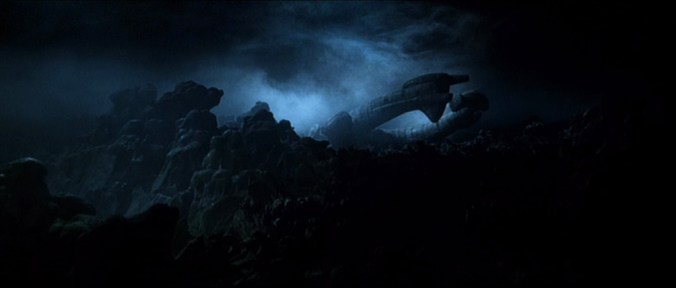
From the start, Alien takes its time, lulling the audience into a false sense of security as it spends the first half hour of its runtime detailing the fairly mundane activities of the crew of the Nostromo who have been awakened early from their hyper sleep to investigate a signal of unknown origin. Instead of forcing the pace early in the film, Scott lets the film’s set design build up a sense of foreboding in the audience, particularly after the Nostromo touches down on the alien planet and the crew begins to explore the ancient alien ship. The sheer size of the ship and its strange biomechanical construction, where the walls seem to ooze and breathe, seemingly aware of the presence of the exploring crew members, is inherently unsettling. The film’s opening half is a master work in building and releasing tension, using tone and pace to create nearly unbearable suspense that is paid off with some famously gory scenes later in the film.

alien2

One of these gory scenes, featuring the film’s famous chest-bursting alien, is the only thing I can remember from my first time ever watching Alien. I went to a friend’s birthday party in elementary school and we were going to watch monster movies all night, so his parents had rented us an assortment of classics, including Alien. I don’t actually remember watching the rest of the film, but the scene where the alien bursts out of Kane’s (John Hurt) chest was forever etched into my mind after that night. I had already seen Mel Brooks’s Spaceballs, so I knew what was coming from the parody, but I still wasn’t prepared for the visceral intensity of the scene. By today’s standards, the scene is actually fairly tame, but my ten-year-old mind was not ready for something so shocking and violent, and I imagine that I don’t remember anything else about the rest of the movie because I actually checked out shortly after seeing Kane’s ribcage explode as the infant xenomorph is born.

Since that initial introduction to the world of Alien, I have seen the original many, many times and have also seen all of its sequels and related spin offs. Up until this rewatch, I likely would have said that my favorite of the series is Aliens, the James Cameron directed sequel that expands on the original film’s mythology, introducing new characters and cementing Ripley’s (Sigourney Weaver) role as the franchise’s central hero, and as one of the most important heroines in all of film history. The sequel jettisons the original’s horror elements in favor of a faster paced, more dialogue heavy, run and gun action film. It opens up the mythology, firmly cementing the Weyland-Yutani Corporation as the real evil of the series, as it remains insistent on bringing a xenomorph to Earth for study and potential weaponization, despite Ripley’s vehement protests. Simply put, Aliens is bigger, more bombastic, and, often, more fun than its predecessor. However, after watching both films in the same afternoon for the first time in years as I prepared to write this post, I have to come down in favor of the original. Aliens is a great film, and unquestionably one of the best sequels of all time. I wouldn’t question anyone who told me that they preferred it to Alien, as I once did, but for right now, I just find the original film to be more fully realized and interesting on the whole.

I think the biggest reason for my new preference for Alien over Aliens is the former film’s deliberateness, in its construction and its pacing. The slower pace and extended introduction of Alien allows for more discovery, whether in the film’s early tracking shots that explore the Nostromo before her crew awakens in their pods, or the aforementioned highlighting of the set design on the alien planet and in the alien ship. Alien is a film that wants its construction to be noticeable and appreciated, and through highlighting that construction Scott and Giger’s effects team create a fully realized world, which raises the stakes on the terror that is unleashed in the second half of the film. The slower pace of Alien also allows the audience to get to know the characters a little better than the characters of Aliens. I care a lot more about the intergalactic truckers who crew the Nostromo than I do about the space marines who populate the sequel.

alien4

One thing that I really enjoy about both of these films, though, is their class sensibility. In both films, the heroes are simply working class people who are doing a job, particularly so in Alien. My favorite character in Alien is Parker (Yaphet Kotto) because he voices the crew’s class concerns. He has one of the first lines in the film, and he uses it to express his dislike for the inequity in the bonus structure for the crew. He and Brett (Harry Dean Stanton), the ship’s mechanics, have to split a share while the rest of the crew each gets full shares. Parker is also the one who reminds the rest of the crew that the Nostromo is not a search and rescue ship when their mission directives are changed to investigate the mysterious distress signal. Parker just wants to do his job, get back to Earth, and get paid. This class consciousness extends to the presence of Weyland-Yutani Corporation as the series’ overarching villain. The corporation’s desire to obtain a xenomorph for study trumps all other concerns, including the safety of the films’ protagonists who are often corporation employees, throughout the series. This positioning of corporate interests or meddling corporate scientists as evil is not uncommon in the sci-fi genre, but it makes for a nice subplot in the Alien films.

Whatever genre you decide to classify it in, whether sci-fi or horror, Alien is undoubtedly near the top of the pile. It launched an iconic franchise of films with variable results. Its influence extends beyond these direct sequels to dozens of sci-fi and horror films that have come since, but none have been able to top the original for innovation and sheer terror. Alien is a timeless classic for that reason. When talking about the history of films, you can’t ignore the xenomorph in the room.

Alexander

Alexander (2004)

Dir. Oliver Stone

Written by: Oliver Stone, Christopher Kyle, Laeta Kalogridis

Starring: Colin Farrell, Val Kilmer, Angelina Jolie, Jared Leto


I have owned the DVD of Oliver Stone’s Alexander director’s cut for over ten years. In that time, I have viewed it exactly once, shortly after purchasing it in the spring of 2006 at the Blockbuster on Forbes Avenue during a sale shortly before the store closed. While rewatching Alexander for this project, I was reminded of the reasons that I had never bothered to go back to it after that initial viewing. The film is simply a mess. It doesn’t work on any level. It is too dull and tedious to work as an action film, too shallow to work as a historical drama, and too conventional to work as the art film that Stone badly wants it to be. While Alexander is certainly beautiful to look at, its interminable length and poor acting make it a misery to sit through.

alexander-3

Alexander is a swords and sandals epic that traces the life of Alexander the Great (Colin Farrell) from birth to death, focusing largely on his conquest of much of the known world in his 20s and 30s. Alexander’s life is related to a scribe by an aging Ptolemy (Anthony Hopkins), and the film proceeds as a fairly typical Oliver Stone biopic. In fact, I was reminded of Stone’s Nixon at times while I was watching Alexander. The subjects of both films are men who are convinced of the greatness of their own destinies, obsessed with obtaining power, and who are ultimately consumed and brought down by their desire for power. Where Nixon succeeds and Alexander fails, however, is in making its subject a relatable and even, at times, sympathetic character. Perhaps by necessity of its setting in Greek antiquity, rather than feeling like the story of a real historical figure, Alexander feels like mythmaking. While there’s nothing wrong with mythologizing a historical figure, that mythmaking both robs Alexander of his relatability as a human character, and is at odds with Farrell’s angsty, dead-serious portrayal of Alexander the Great.

It isn’t just Farrell who turns in a lacking performance, unfortunately. Alexander must feature one of the most squandered assemblages of talent ever in a single film. Hopkins is largely reduced to the role of a voice-over narrator, appearing in only a handful of brief scenes, in which he does little besides dictate his voice-over narration to an on-screen scribe. Angelina Jolie, as Alexander’s mother Olympias, is an Oedipal seductress who is given little to do on screen besides pout and smolder. Her role as a major influencer on Alexander’s life and as a central schemer in the machinations that lead to the death of King Philip (Val Kilmer), Alexander’s father, seem unearned. Similarly, Rosario Dawson and Jared Leto are both underused, as Alexander’s wife and (not so) secret lover, respectively. In fact, the only performance in the film that stood out to me was that of Kilmer as King Philip. Kilmer gained 50 pounds for the role, and he lets his physicality do the heavy lifting for him in the performance. It stands in stark contrast to Farrell’s verbose, manic Alexander and Jolie’s subdued Olympias.

alexander-1

Despite its many flaws, there are some things to like about Alexander. As I mentioned, the film is often breathtakingly beautiful. If the film’s casting budget largely feels wasted, its special effects and filming budget do not. Stone’s recreation of ancient Greece and Babylon is beautiful, and it really works. The sets and costuming are detailed and beautiful to look at, and they go a long way to lending it credence as a history. The large scale battles that are featured in the film, especially Alexander’s first victory, are excellently shot, blending overhead shots of mass troop formation with close-up shots of visceral hand-to-hand combat.  The film’s real world locations are also beautifully filmed, with the final battle in India standing out in particular. The lush greens of the Indian jungle stand out richly in contrast to the film’s existing color palette which is dominated by reds and golds. It’s a shame that Stone can’t reign in some of his more experimental tendencies during that final battle, opting to color shift the film halfway through the scene, because it takes away from a set piece that is working, visually, and serves as a reminder of the self-indulgence that the whole film is suffering from.

Upon its release in late 2004, Alexander was panned critically and bombed spectacularly at the domestic box office, returning just under $35 million against a $155 million dollar budget. International box office receipts would make the film a very modest financial success, and the film would go on to have great success in the home video market, with four separate cuts of the film being released by 2013. I have only seen the 2005 director’s cut of the film, but I can only imagine that the two later cuts (the “Final Cut” and the “Ultimate Cut”) would be even more interminable than the 2005 version, as they are both nearly four hours long. Ultimately, these additional cuts of the film are indicative of the extreme self-indulgence that hamstrings Alexander in general. Stone falls in love with his own story, and too often opts to tell rather than show. As a result, its action set pieces, while enjoyable, are too few and far between, causing the film to feel like a historical reenactment. However, the film is unsuccessful in that regard as well, because even after spending nearly three hours with the subject, I didn’t feel that I came away with any larger understanding of who Alexander the Great really was as a person. The personal details that could have fleshed out Alexander, making him a well-rounded protagonist, and making for a more interesting and successful film in general, are largely glossed over or left to insinuation.

alexander-5

It’s a shame that Alexander doesn’t make for a better film, because the building blocks are there for something more entertaining and engaging. With a little more editorial oversight, Alexander could have been an effective historical action film; with better casting and a more personal (though probably less historically accurate) treatment of its subject, it could have been an interesting biopic of one of ancient history’s most important figures. Without either of those things, the end result is a bloated historical epic that is often content to meander from one life event to the next, failing to provide a more personal context for Alexander. Apparently, the “Final Cut,” released in 2007, attempts to rectify some of these shortcomings and includes a great deal of footage examining Alexander’s sexuality and his relationship with Hephaistion (Leto), as well as his relationship with both of his parents. Unfortunately, I have only seen the director’s cut, and don’t have the patience to sit through Alexander another time to find out if Stone’s attempt to have his cake and eat it too by extending the film’s runtime by nearly an hour is worth it.

Adaptation.

Adaptation. (2002)

Dir. Spike Jonze

Written by: Charlie Kaufman & Donald Kaufman (from the novel The Orchid Thief by Susan Orlean)

Starring: Nicolas Cage, Meryl Streep, Chris Cooper


Charlie Kaufman is, hands down, my favorite screenwriter. He’s also one of the few working screenwriters who has developed into a true auteur, almost immediately establishing his singular, idiosyncratic voice in his first few feature scripts. Being John Malkovich announced the arrival of both Kaufman and director Spike Jonze as major level talents, but it was their second artistic pairing, Adaptation., that revealed the depths of Kaufman’s narrative dexterity. Adaptation. was also the film that introduced me to Kaufman’s cerebral brand of storytelling, and hooked me on his neurotic genius.

Famously born out of Kaufman’s real life writer’s block while attempting to adapt the Susan Orlean novel The Orchid Thief, Adaptation. is, instead, a journey into the writer’s head, exploring the process of adaptation and writing itself as Kaufman inserts himself into his own screenplay. The Charlie Kaufman (Nicolas Cage) of Adaptation. is a caricature of the real life Charlie Kaufman, highlighting the screenwriter’s awkwardness and insecurity as he struggles to find an entry point into his film adaptation of The Orchid Thief. Cage also plays Kaufman’s fictional twin brother, Donald, who is also working on a screenplay, and who serves as a foil for the fictional Charlie. The film’s narrative is highly complex, layering the story of Kaufman’s writer’s block with scenes from the novel, which depict New Yorker journalist Susan Orlean’s (Meryl Streep) meeting, and subsequent obsession with, orchid hunter John Laroche (Chris Cooper). By the film’s end, Kaufman has crafted an ouroboros of a story, self-referential to the point of collapsing in on itself in a final act that is both intentionally clichéd and artificial, and also genuinely cathartic.

adaptation-2

As I mentioned earlier, Adaptation. was the film that really introduced me to Charlie Kaufman. I had seen Being John Malkovich on Comedy Central sometime prior to having seen Adaptation., but it was the latter film that made a real impression on me. I picked it up on DVD (used from Blockbuster, as was my wont in those days) sometime in 2003 during my senior year of high school. I hadn’t seen the film in theaters, but I remembered reading a review in Newsweek magazine that detailed Adaptation’s creative genesis and my interest was piqued. What I experienced when I finally got my hands on a copy of Adaptation. did not disappoint and turned me into a lifelong devotee of the work of Charlie Kaufman.

I had seen plenty of movies that trod in waters of self-reference and that highlighted aspects of their own creation or artificiality, but none quite like this one. Adaptation. was a deep dive into the entire creative process. I had never before seen a film that put its stitches and seams so on display. I don’t remember my first viewing specifically, but I know that the first few times I watched the film, I still couldn’t quite put all the pieces together. The narrative jumps forward and backward in time, layering and stitching together the threads of its story, mixing together real people and fictional characters, all being presented in a highly self-conscious filmic representation. Adaptation. simultaneously draws the viewer in to witness its characters’ most vulnerable moments, while keeping them at a distance through a veil of artificiality. It’s complex, high-minded filmmaking, and it can be a lot to take in.

adaptation-7

With all of the high concept ins and outs of its screenplay, it would be easy for Adaptation. to veer off into the territory of navel gazing, or simply to fall apart under the weight of its own ideas. The thing that makes the film so successful is that it is so rooted in genuine human emotion. The performances of its three leads and Jonze’s warm treatment of their flawed, sometimes unlikable characters, keep the film emotionally resonant. Cage is great, and shows a fairly dynamic range in portraying both the neurotic, misanthropic intellectual, Charlie, and the brash, dopey populist, Donald. Donald so obviously looks up to Charlie, attending screenwriting seminars in an attempt to impress his famous brother. Charlie is embarrassed both by and for his twin’s earnestness. Though they spend the bulk of the film fighting and bickering, in fact much of the film’s humor is derived from Donald’s role as a mirror image to Charlie, the twins are there for each other by the end of the film. The love/hate relationship between the twins is the emotional heart of the film, and its final payoff is devastating. As Donald lies, dying, in the middle of the road, he and Charlie share a moment of true pathos. Charlie cradles his dying twin’s head and sings “Happy Together,” an ongoing motif in the film, in an attempt to keep him from heading in to the light.

Streep and Cooper are both excellent, as well, with Cooper winning an Oscar for his portrayal of Laroche the orchid poacher. He’s responsible for one of the film’s funniest lines. When describing the fleeting nature of his myriad interests throughout life, and in particular his decision to stop collection tropical fish, he says, “…One day I say fuck fish. I renounce fish. I vow never to set foot in that ocean again, that’s how much fuck fish.” Laroche’s finality is reflective of the film’s emotional message that love and happiness can be fleeting, so when you find some of either, enjoy it while it lasts and learn to let it go when it’s gone. Over the course of the film, we see Susan Orlean learn this, as she grows more and more enamored with Laroche. Early in her research for The Orchid Thief, we see Orlean drawn in by Laroche’s charisma, and his dogged pursuit of the ghost orchid, which she becomes obsessed with seeing. Pursuing the ghost orchid and Laroche is a metaphor for Orlean chasing her own moment of happiness and adventure, outside of her loveless marriage and stable New York City academic lifestyle. By the film’s end, she’s found that both the orchid and Laroche’s charm were illusory, and she is left, like Charlie, cradling the dead body of a man she loved.

adaptation-3

As I mentioned earlier, the film’s denouement is intentionally artificial and contrived. The brothers Kaufman follow Orlean to Florida where they discover she and Laroche’s secret stash of drugs, derived from the orchids that he grows in his nursery. When the twins are found out, Laroche and Orlean chase them into the swamps of the Everglades, intending to kill them to cover up the secret of the drugs and of their affair. Through a series of increasingly unlikely and violent twists, Donald and Laroche end up dead, while Orlean and Charlie are left in the swamp trying to pick up the pieces. In the hands of a less capable filmmaker, this narrative left turn could potentially unravel the whole film, and would certainly read as wholly unrealistic. However, Jonze directs the scenes masterfully, creating tension out of a patently absurd situation, and also wringing deep pathos out of both Donald’s death and Orlean’s realization that she is, in Charlie’s words, an “old, lonely, desperate, drug addict.” Even after watching her hunt Charlie and Donald through the swamp, it’s impossible not to feel some pity for Orlean, after having seen how empty the rest of her life is outside of the hunt for the ghost orchid. Jonze chooses to hold the camera on Orlean as she keeps Laroche’s bloody body from sinking into the swamp, letting the audience pick up her realization that everything she’d hung her hopes on was a lie.

I think this blend of the cerebral and the emotional makes Adaptation. Kaufman’s most fully realized work. It probably isn’t my favorite movie that he’s written, but it is likely his best. The script is Kaufman’s most complex, but the emotional resonance of Jonze and the spectacular cast give it a core for the wacky, high concept ideas to revolve around. Both in the film and in the script, Kaufman and his on-screen counterpart break all of the rules of screenwriting in their attempts to capture the essence of The Orchid Thief. While he may never truly unravel the mysteries of the novel, the Charlie Kaufman of the film does learn a profound lesson by the end. By the film’s close, Charlie has gained some perspective and is ready to finish up his screenplay. In a way, the screenplay has been his ghost orchid all along.

adaptation-6

It’s a wonder that a film as bursting at the seams with concepts as Adaptation. can wrap up so neatly, but the final shot is simple and perfect and it never fails to make me smile. With Charlie driving off to put the finishing touches on his screenplay, the camera lingers on a planter full of black-eyed susans as “Happy Together” by the Turtles fades in on the soundtrack. Gradually, the cars in the background begin to speed up as day turns to night in what is now a time lapse shot. The flowers close and then open as the Sun rises again, and the cars continue to speed by in the background. Something about those flowers opening and closing in the sped up time lapse, striving to get closer to the light, has always felt like a perfect ending to this film. It symbolizes the cycle of death and rebirth, the hope that each new day can bring. Adaptation. is a near perfect film, one of the best of the 21st century so far, and I love watching it every time I pull it off the shelf.

About Schmidt

About Schmidt (2002)

Dir. Alexander Payne

Written by: Alexander Payne (from the novel by Louis Begley)

Starring: Jack Nicholson, Kathy Bates, Hope Davis, Dermot Mulroney


About Schmidt feels like a forgotten movie. I rarely hear anyone mention it, and I know that it has been largely ignored by myself. I purchased this film on DVD sometime in 2003 from Blockbuster Video. At that time in my life, Blockbuster was a big source of DVDs for me. They would almost always have their used rental discs for sale at pretty good prices about a year after their release, due to the store’s policy of stocking heavily on new releases and then downsizing their stock once the movies got a little older. Myself and my best friend would go to the area stores and raid their used DVD bins, stocking up on 4 for $20 discs. Our logic was that since it was about $3 to rent a DVD for the night, if we could get a disc for $5 and watch it twice then we were getting a good deal. I’ve watched About Schmidt more than two times since purchasing it some 13 years ago, but not many. I remember enjoying the movie, but it never made a huge impression on me, however it has hung around in my DVD collection when I’ve lost or misplaced other, more cherished discs.

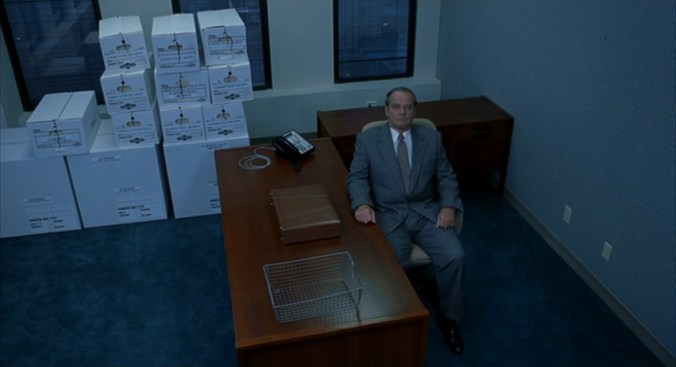
It isn’t so much that About Schmidt is a bad movie, it’s just that it’s a very bland one, and it hasn’t aged particularly well. The film begins with the retirement of Warren Schmidt (Jack Nicholson) from his job at a Midwestern insurance firm. Already put off by the loss of his familiar work routines, Warren is thrown into a full three-quarter-life crisis after the death of his wife Helen (June Squibb) and his subsequent discovery of her decades-long affair with his best friend. Warren’s solution to his crisis is to set out in the RV that he and Helen purchased to spend their retirement together, and drive cross country from Nebraska to Colorado to attend the upcoming nuptials of his daughter, Jeannie (Hope Davis). Along the way, Warren begins to learn more about himself, and about the people around him, as he starts to accept and adjust to his new life.

about-schmidt-1

Like the rest of Alexander Payne’s output, I feel About Schmidt is a fine piece of entertainment. It’s largely a light comedy, and it succeeds at hitting the beats it’s supposed to. The performances are solid across the board, with Nicholson and Kathy Bates receiving deserved Oscar nominations for their roles. However, my favorite performance was Dermot Mulroney as Randall, Jeannie’s ponytailed fiancée, who sells waterbeds, invests in pyramid schemes, and very obviously does not meet Warren’s approval. Randall is the film’s most obvious comic relief, but Mulroney never plays him as a total clown. Randall takes pride in his work, but he works to live rather than living to work. In this way, he provides a foil for the workaholic Warren, who sees Randall as a rube, unfit to wed his daughter. It’s telling that Warren made his living selling life insurance, a product that can’t be cashed in while the purchaser is still alive, versus the waterbeds that Randall sells, which are meant to provide comfort and enjoyment in the here and now. Halfway through the film, Randall approaches Warren with an opportunity to invest in what is “definitely not a pyramid scheme,” in an attempt to bolster his economic prospects in a changing economy, but also in an attempt to ingratiate himself to his future father in law, and to try to make an entry into the world of the upper middle class. Warren’s rejection of Randall is indicative of his classist attitude, as he repeatedly claims that Randall is “not good enough” to marry Jeannie, despite the obvious evidence that he makes Jeannie happy.

about-schmidt-2

While Warren’s classist nature is revealed through his interactions with Randall, the film’s voice over narration often reveals its tendency towards White paternalism. Early in his retirement, Warren sees a commercial for Childreach, which leads him to sponsor a six year old boy in Tanzania named Ndugu. Throughout the film, Warren writes letters to Ndugu, which are narrated in voice over. Warren introduces himself to Ndugu as his new “foster father,” and proceeds to use his letters to Ndugu as a way to vent his frustrations and project his unfulfilled dreams onto the child. The letters are presented comically in the film, and they are often genuinely funny, but the content reveals Warren’s basic inability to understand or relate to cultures other than his own. The fact that Warren finishes off his first letter by writing that he’s sure Ndugu wants to “hurry down and cash that check and get [him]self something to eat,” is funny, but it also underlines a paternalism inherent in the attitudes of otherwise well-meaning do-gooders. I feel that this sort of well-meaning sentiment applies to the film as a whole. It’s funny, the acting is good, and it is largely enjoyable, but the point of view that it represents as the norm likely wasn’t relatable to most average Americans on its release, let alone now, when American society has become more diversified and stratified than ever.

As I mentioned, About Schmidt simply feels outdated today. The film was released in December of 2002, into a much different America than the one that I live in today. The idea of a gold watch retirement from a career after 50 years of service with one company seemed antiquated to me in 2003, and feels even more so watching the film again today. While the prospects for a retiree in the early part of the 21st century may have seemed bright, the reality for most American workers just 15 years later is that there may be little chance for a true retirement of any sort. The type of middle class prosperity that Warren Schmidt is meant to represent in this film is largely unachievable for most American workers in the year 2016. And while the film is dubious, or even downright pessimistic, about the happiness that can be found through a life dedicated to the achievement of material and monetary wealth, the relative comfort that a man in Warren Schmidt’s position has been able to enjoy, even at the expense of a more meaningful marriage or relationship with his daughter, must be preferable to an existence spent working overtime for a degrading wage simply to provide the bare necessities for your family.

about-schmidt-3

The feeling that this film’s subject matter is distinctively out of step with the modern world is a problem that I’ve come to have with the films of Alexander Payne, in general. I have seen all of the films that he’s directed with the exception of his debut, Citizen Ruth, and they have always struck me as decent movies that leave little impression on me as a viewer. I have trouble relating to the Midwestern-ness of About Schmidt and Nebraska, and I also have trouble relating to the privilege and overbearing White-ness of Sideways and The Descendants. While I’ve enjoyed all of these movies at different times, and still think that they’re largely decent films with strong performances and are generally of high production quality, I can’t help but feel that they aren’t reflective of the face of America. As a viewer, I’m getting bored of the dominance of movies about White male elites, and I am hoping to see more representation of women, people of color, gays, and other marginalized groups in the films that get made. I’m hoping to see more films being made by people in these marginalized groups. There have been plenty of just fine movies made about the experiences of aging White men, and those movies will always continue to be made, but I hope that it isn’t at the expense of potentially great movies about characters who look less like the folks in Omaha.

2001: A Space Odyssey

2001: A Space Odyssey (1968)

Dir. Stanley Kubrick

Written by: Stanley Kubrick & Arthur C. Clarke

Starring: Keir Dullea


I’m not sure what I can say about 2001: A Space Odyssey that hasn’t already been said. Universally considered one of the best films ever made, 2001’s place in the pantheon of cinema isn’t in question. 2001 is Stanley Kubrick’s meditation on human progress, and his first (and possibly only) foray into the realm of the cinematically sublime. The film, based on Arthur C. Clarke’s novel, charts the history of the development of human intelligence, beginning with the spark of human intelligence in a group of our simian ancestors, and jumping forward into the (then) far future, where human minds had outgrown their earthly concerns and turned their gaze to the stars. The film’s speculative and visionary subject matter is reflected in Kubrick’s grandiose imagery and sublime visual poetry.

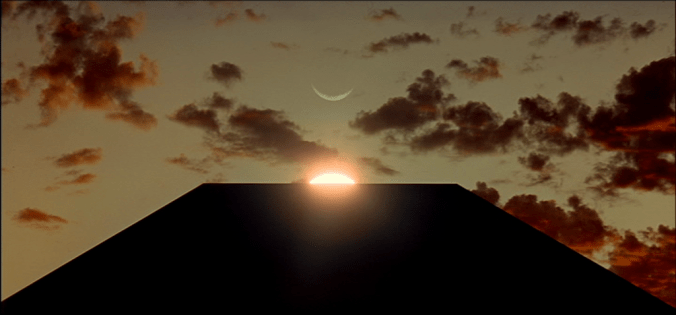
2001 opens with a segment titled “The Dawn of Man,” in which we see a group of apes begin their evolutionary journey, as they learn to use tools and wage war. Their leap in intelligence is sparked by the appearance of a vibrating black monolith, which seems to bestow knowledge upon those who encounter it. Fast forwarding millennia, the film then shows us a speculative year 2001, in which space travel has become commonplace, and in which a second monolith has been discovered in a crater on the moon. This monolith is transmitting signals in the direction of Jupiter, and the quest to find its source informs the primary plot of 2001. The film’s more narrative middle section shows us life aboard the space ship Discovery, where astronauts Dave Bowman (Keir Dullea) and Frank Poole (Gary Lockwood), along with their on-board computer HAL 9000 (voiced by Douglas Rain) have taken on the quest of finding the source of the monolith’s transmission. What they find, both on Discovery, and beyond Jupiter brings into question the nature of humanity, and humanity’s role in the larger universe.

2001-3

I first encountered 2001 right around the year 2001, when I was about 16 years old, and I was wholly unprepared to digest the film’s dense, philosophical themes. It was, however, the first time that I can remember being completely in awe of a film. I had never experienced a film whose visuals so greatly impacted and enchanted me, and in so many different ways. The early portions of the film perfectly capture the mundane minutiae of space travel in the year 2001, where our journey to the stars has been commodified and coopted by corporate sponsorship. The film’s final segment, in which astronaut Dave Bowman encounters the source of human intelligence, and is able to experience the evolution of man into his next form, are visually spectacular by contrast. Bowman’s journey beyond Jupiter is presented as a psychedelic blur of color and shape, assaulting the senses and jarring the viewer after experiencing the first two hours of the film which are meditative and defined by their restraint and glacial pacing. I was hooked.

Over roughly the next five years of my life, 2001 was my favorite film, and Kubrick was undoubtedly my favorite filmmaker. I shared the film with anyone who would allow me, attempting to tease out its mysteries through shared viewership and late night dorm room conversations. It wasn’t for everyone. I can remember bringing the VHS home from the public library for the first time and my father telling me the story of when he went to see 2001 in 1969. The film’s pacing, length, and lack of dialogue turned him off. He said that he walked out during the film’s famous docking sequence set to Strauss’s “Blue Danube Waltz”, thinking, “What did I just pay money to see?” But for me, the esoteric nature of the film was a part of its appeal. Not only had I never before seen a film that posed such deep philosophical questions, I had never seen a film that felt as if it were a question that needed to be answered itself. I felt rewarded with each repeat viewing as I started to formulate my own answers to the film’s internal riddles, and the beauty of the film began to reveal itself to me with each subsequent trip beyond Jupiter.

2001-5

After some time, though, I no longer felt the need to continue to revisit this classic. My familiarity with its structure, its classic shots, and its cerebral questing was total. However, as I moved on from 2001 in my early 20s, and began to revisit Kubrick’s other films, I gained a new appreciation for 2001 and began to regard it in a different light. I began to appreciate what I referred to earlier as the sublime visual poetry on display in the film. When I watched the film after having read Michel Ciment’s Kubrick, an in-depth examination of the director’s films and visual style, and after fully experiencing the director’s entire body of work, I began to be interested in 2001 less for its inherent mysteries than in its ability to elevate the cold and the artificial to a place of warmth and emotion through its visual style. 2001 may be the Kubrick film least interested in human-centered narratives, but ironically, I find it to be his most emotionally in depth work, and it is certainly the Kubrick film that elicits the most emotional response from me.

2001-7

The grandeur of the Blue Danube sequence, when we are first given a glimpse of Earth from space, and introduced to the realities of space travel in the year 2001, is a perfect marriage of sound and image and an introduction to what I have been referring to as the film’s sublime visual poetry. The sequence, which is free of any dialogue, links human artistic achievement in Strauss’s “Blue Danube Waltz” with human technological achievement and prowess in the impressive space ships. Following immediately after the “Dawn of Man” segment that opens the film and which is linked visually to that sequence through the famous graphic match of a bone with a space ship, the “Blue Danube” sequence underscores the progress that humanity has made, while also serving as a reminder that despite our technological and cultural achievements, man and his creations are still dwarfed by the awesome void of outer space. The juxtaposition of the mundane (a man falling asleep in his chair while watching television) with the fantastical or awe-inspiring (that man’s chair being on a spacecraft, where a flight attendant casually retrieves his pen before it floats away in the zero gravity environment), are at the heart of the film’s exploration of the sublime. It is a dichotomy that Kubrick returns to again and again, underscoring the insignificance of man’s activities on the Universal scale, while at the same time acknowledging man’s destiny and deserved place among the stars.

The film’s final scene returns to this juxtaposition, as Bowman goes beyond Jupiter, and is confronted with both his mortality, and evidence of man’s ultimate evolutionary destiny. At the end of his journey, Bowman finds himself in a lavishly decorated apartment where he watches himself live and age, eventually becoming a bedridden old man. The scene gives the impression that Bowman understands that he is on display, much like an animal in a zoo, as he goes through the end of his life alone,  eating meals quietly. Just before he is going to die, Bowman is presented with the monolith, and as he reaches out for it, accepting both its knowledge and his place in the Universe, he is reincarnated as the Star Child. Bowman becomes the next step in man’s evolutionary development, a being of pure energy, seemingly possessive of the answers to the mysteries of the Universe. In the final shot of the film, the Star Child returns to Earth, accompanied by the strains of Wagner’s “Thus Spake Zarathustra.” Again Kubrick is juxtaposing his beautiful images with established classical music to indicate the presence of the sublime. While there is some debate on the role of the Star Child, I believe that he returned to Earth as an ambassador, not a warrior or a weapon. His role is to elevate mankind and show the ultimate potential of humans to ascend to a higher plane among the stars.

2001-1

Upon this rewatch, I was instantly reminded of the awe I felt that first time I watched 2001 as a teenager. I hadn’t seen the film in its entirety in at least five years, but as I mentioned, its rhythms feel like they’re a part of my unconscious, always playing in the background of my dreams. Watching it again, on a new Bluray disc that I purchased about three years ago after realizing that I no longer had my DVD copy, I was immediately taken in by the film’s beauty. The transfer was great, and I was able to watch the film with more visual clarity than I ever had before. The sterile white of the film’s space ship interiors seemed to pop off the screen when contrasted with the vast blackness of the outer space exteriors. The colors in the “Jupiter and Beyond the Infinite” sequence at the film’s end were hallucinogenic and brighter than I remembered them being. I was taken in by the films rhythms, which were still so familiar, but which I hadn’t experienced in so long. Everything about the pacing is perfect, from the tense, episodic structure of the “Dawn of Man” segment, to the fluid, yet precise construction of the “Blue Danube” sequence, the film is a master work in editing. Although the only real narrative tension doesn’t appear until very late in the film’s second act, it is propelled forward by its beautiful imagery and excellent craftsmanship. I was again left with the feeling that the film was being presented as a question, or maybe as a challenge. I thought nearly a decade ago that I had unraveled all of this film’s secrets, but I’m sure now that I never really will. It should probably work its way back into my yearly rotation, though.

21 Grams

21 Grams (2003)

Dir. Alejandro Gonzalez Inarritu

Written by: Guillermo Arriaga

Starring: Sean Penn, Naomi Watts, Benicio del Toro


21 Grams focuses on the aftermath of a fatal accident that brings Cristina (Watts), Paul (Penn), and Jack (del Toro) together in tragic fashion. All three of these characters bring a cargo hold’s worth of baggage into the film, but when Cristina’s husband and daughters are killed in a hit-and-run accident, their lives begin to spiral out of control and intersect as they circle the same drain. Paul, who is in the final stages of a terminal illness, is temporarily saved when he is transplanted Cristina’s husband’s heart, leading him to seek her out and begin a relationship. He becomes dragged into Cristina’s quest to get revenge on Jack, an ex-con who had been born again and was attempting to turn his life around when he caused the accident that killed Cristina’s family. Through these three characters, and their intertwining tale of redemption and revenge, Inarritu and Arriaga explore themes of death, grief, responsibility, and faith.

21-grams-1

The film’s theatrical release was in November 2003, the beginning of my senior year of high school, although I’m sure it probably never made its way to the small town in West Virginia where I grew up. My first introduction to 21 Grams (and to most of the films I will write about here) was on DVD. The late high school years were the beginning of my development into a true cinephile, fueled by the easy access to anything I could imagine on home video, and the relative low cost of collecting DVDs at the time. My tastes at the time were somewhat eclectic; my collection was comprised mostly of classic American cinema (heavy on the American New Wave), 1990s independent cinema (heavy on Tarantino and the Coens), kung-fu movies, horror, and a scattering of basic contemporary “indie” cinema. My tastes in that last category could basically be described as enjoying films with non-linear narratives (Memento, Eternal Sunshine of the Spotless Mind), maudlin viewpoints or mopey protagonists (American Splendor, Punch Drunk Love), narrative synchronicity (Magnolia), or some combination thereof. I also had a great fondness for Focus Features releases at the time, so even without having seen more than a trailer, I confidently purchased 21 Grams sometime in the spring of 2004.

That spring and summer I know I must have watched this film a half dozen times. I watched it alone, I watched it with friends, with my girlfriend. At that time, it’s quite likely that I might have listed 21 Grams among my favorite films, right alongside Fight Club and Trainspotting. 21 Grams distilled so many of the generic tropes and narrative tics that I was fond of into their perfect form. Its story is presented in a jumble of scenes, jumping backward and forward in time, requiring and rewarding close watches as the interconnections between these characters are developed and revealed. The titular 21 grams refer to the weight that a person loses upon death, the weight of the soul leaving the body. The film’s central thematic conceit, what is the true weight of a life, or of a death, seemed like a puzzle to be solved. At that time, 21 Grams was certainly my favorite film featuring Naomi Watts, and I already owned Mulholland Drive, a film that is undoubtedly one of the greatest of the 21st century and probably my favorite film of all time now.

21-grams-7


I say all of that, to now say something that is probably obvious at this point: somewhere along the way, my strong affection for 21 Grams soured. I moved to Pittsburgh in the fall of 2004 to study film, and over the course of my first year living away from home, and my first year truly immersing myself in a culture of watching films seriously, my tastes began to develop and change. I split a Blockbuster movie pass with my friend, Brian, and we abused the Hell out of it, sometimes renting three movies a night from the Blockbuster on Forbes Avenue. I was so busy exposing myself to new ideas that I rarely went back to many of the DVDs that I had brought to college with me, often treating them like comfort food, and 21 Grams was certainly lost in the shuffle. I mentioned it earlier alongside Fight Club and Trainspotting as a favorite of the time, and those stayed relevant much longer because of their status as “new classics,” and their visceral, fun styles. The languid pace, morbid tone, and philosophical bent of 21 Grams didn’t lend itself to providing relief in my more serious film schedule, so I always passed it up.

Over the years, and without another viewing since 2004/2005, I began to think of 21 Grams as being built around a somewhat trite formal conceit, its non-linear structure, and using that to prop up an otherwise flimsy narrative overwrought with philosophical import. I felt that its twists were unearned. After so many viewings, its revelations were trite. I suspect that that opinion initially formed after being largely unimpressed by Inarittu’s follow up film, Babel. That film is much of the same, exploring the same grand philosophical themes of 21 Grams through a more linear, but globe spanning, narrative. The failures of Babel to break new ground, and my general distaste for the film over the years, confirmed my bias against 21 Grams, and as such I hadn’t watched it in over a decade until it came time for this project.

21-grams-2


Overall, I was pleasantly surprised by how much I did like 21 Grams. There were times when the film felt a bit self-important, but I had forgotten just how great the performances from all of the lead actors were, and that really helped to make up for some of the overly weighty dialogue. Watts’s performance feels like an exposed nerve, and del Toro is totally convincing as Jack, whose loss of faith after killing Cristina’s family was the most interesting character arc in the film for me. I had also forgotten the film’s visual style, which evokes a sense of total despair as the characters’ lives unravel. The visual palate, alternating from cold, blue interiors, to sun-bleached, yellow exteriors in the desert, is striking. While his later work has gained him critical accolades, I feel that 21 Grams may be Inarittu’s best film, and I think it is certainly the best of his early career triptych, formed by his partnership with writer Guillermo Arriaga. For me, personally, Inarittu’s films have provided diminishing returns since 21 Grams, as he has become a visually masterful director, who increasingly leans on his own screenplays to the detriments of the films overall. Perhaps another multi-film partnership with a talented screenwriter could push Inarittu away from being such a technical wizard and back into making more rewarding, and well-rounded films. While it certainly doesn’t hold up to the early regard that I had upon first seeing it at 18, 21 Grams really does have some pretty impressive performances and the groundwork of Inarittu as a visual auteur of the cinema is apparent in its style. But, like much his later work, the narrative is never as compelling as the impressive style, and the film’s themes and philosophy are both too broad and too vague. I likely won’t go back to 21 Grams anytime soon, but I was glad to have the opportunity to reevaluate it.