Being John Malkovich

Being John Malkovich (1999)

Dir. Spike Jonze

Written by: Charlie Kaufman

Starring: John Cusack, Cameron Diaz, Catherine Keener, John Malkovich


Being John Malkovich is quite a feat as a debut feature for its writer/director team of Charlie Kaufman and Spike Jonze. At the time of its release Kaufman was a relative unknown, toiling as a television writer, all of whose feature scripts had been rejected. Jonze was best known for his music video work, having directed iconic clips for artists as diverse as The Beastie Boys, Weezer, Björk, and Fatboy Slim. After the release of this film, however, both would become, if not household names, celebrities of the indie film world. Though its off-kilter premise and subtle sense of humor made the film’s release a slow build and prevented it from being a true commercial success, Being John Malkovich achieved near-universal critical acclaim, and more than made its budget back. Eventually the film would be rewarded with Academy Award nominations for both Kaufman and Jonze, as well as a nomination for Catherine Keener for Best Supporting Actress. As I alluded to in my post about Adaptation., Being John Malkovich announced its eccentric creative brain trust as major players in the film world going into the 21st century.
malkovich 7

I remember hearing about the movie when it was released, but I don’t think that I had any interest in seeing it. Being John Malkovich is a weird comedy for adults, and I was only 14 at the time. I didn’t know who John Malkovich was, and I certainly wouldn’t have appreciated or understood the film’s strange sense of humor if I had seen it when it was released. I know this because I didn’t appreciate it when I did see Being John Malkovich for the first time on cable a few years after it came out. I turned the movie on, near the beginning, on Comedy Central, and I can remember thinking to myself, “What the heck kind of weird movie is this?” I’m pretty sure I didn’t watch the whole thing, but if I did, it didn’t make an impact outside of its deep strangeness. At that time, probably 2001 or 2002, I had never been introduced to surrealism, and my tastes in comedy were certainly not geared towards something this strange and cerebral. Being John Malkovich was simply too much of a head trip for me and, to be fair, it probably was for many people on their first encounter.

The film follows Craig Schwartz (Cusack) a skillful but struggling puppeteer who is encouraged to go looking for a job by his wife, Lotte (Diaz), to bring in some income and take his mind off of his failures as an artist. He takes a job as a filing clerk for LesterCorp, which is located on the 7 ½ floor of a New York City skyscraper, home to an array of unusual characters, not least of which is Dr. Lester himself (Orson Beane). While working at LesterCorp, Craig develops a one-sided obsession with his coworker, Maxine (Keener). One day, Craig finds a small, hidden door in the filing office and opens it to reveal a dank, earthen tunnel. After crawling into the tunnel, Craig finds himself inside the consciousness of actor John Malkovich (playing himself), where he experiences the world through Malkovich’s eyes for 15 minutes before being unceremoniously dropped onto the side of the New Jersey turnpike. Craig shares this discovery with Maxine, in hopes of winning her affections by sharing this surreal and one-of-a-kind experience with her, and the two go into business together, selling the opportunity to inhabit Malkovich to sad-sack losers for $200 a trip. While a love trapezoid forms between Craig, Lotte, Maxine, and Malkovich, Craig finds a way to put his skills as a puppeteer into the service of controlling Malkovich’s body so that he can remain inside him indefinitely. And that is all before the movie starts getting really weird.

malkovich 4

I came back to Malkovich after seeing and loving Adaptation. I was a little older, and I was coming into the experience this time with a better handle on Kaufman’s unique voice. So, the pieces all fell into place for me, and I was able to appreciate the film on its own deeply strange, darkly comic terms. While I fell in love with Adaptation.’s lofty narrative ambition, I appreciated Being John Malkovich for its straightforwardness. Even though its plot is completely bananas, with each passing scene only serving to up the ante for strangeness, the film is played straight. Its humor is often deadpan, to the point of absurdity. It lacks the temporal shifts and narrative overlapping of later Kaufman films, opting instead for a linear structure. Characters don’t spend great periods of the film fretting over the metaphysical or cosmic implications of the bizarre scenario in which they’ve found themselves, as does the fictional Charlie Kaufman of Adaptation., they simply react as if finding a portal into a celebrity’s brain behind a filing cabinet is the sort of thing that could happen to any average office drone. That a film like Being John Malkovich could be described as straightforward at all is a testament to the skill of Kaufman and Jonze at crafting a believable, lived-in world, peopled with characters who feel like they could be real. Just like the 7 ½ floor, it seems like Being John Malkovich exists in a parallel world to the real one, where objects and people from the real world are easily recognizable, but the perspective is slightly skewed. The setting is familiar, but the characters’ relationship to it is somehow off.

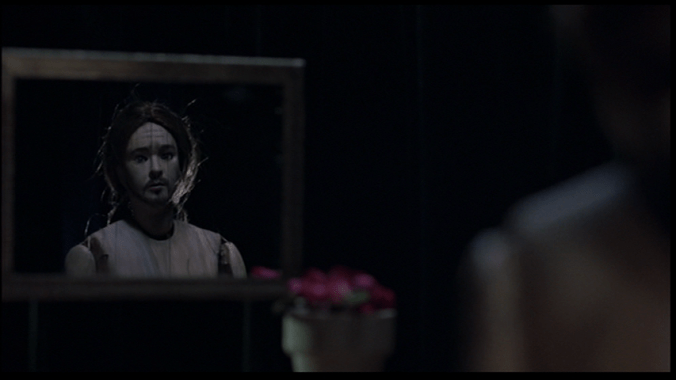
That skewed perspective is reinforced by the choice of Cusack and Diaz as the film’s leads, as both actors are asked to play against type for their roles. Though often cast in comedies, Cusack was coming off of a run of serious dramas including Midnight in the Garden of Good & Evil and The Thin Red Line, and according to reports he discovered Malkovich after asking his agent to find him the “craziest, most un-produceable script” he could find. Craig is a typical Kaufman protagonist, an artist who can’t reconcile his own ambitions and talents with the needs of the day to day world, and Cusack perfectly embodies the depression and malaise that come along with that character. In the film, Craig’s hair is long and greasy, he’s unshaven, and he is shabbily dressed, a far cry from the typically suave, handsome on-screen persona that Cusack is typically associated with. Although he is sometimes associated with the sorts of mopey, lovelorn character that he plays in Being John Malkovich, none of Cusack’s other comedic roles (save for possibly Lane Meyer in Better Off Dead, but we’ll get to that one soon enough) skew this dark. Craig’s attempts to maintain control over his life, the people in it, and the façade that he’s built up using Malkovich as a puppet push him to extremes.

malkovich 2

If Cusack is playing against type, Diaz is asked to make a full on transformation for the role of Lotte. Diaz had burst into the mainstream the year prior playing the titular character in There’s Something About Mary. After that role, she was poised to break out as one of Hollywood’s biggest stars, and she did, but Being John Malkovich marks a definite detour into fertile territory for her. Rather than capitalize on his lead actress’s fame, Jonze opts instead to make Diaz nearly unrecognizable in the film. Her signature blonde tresses are traded in for a brown, frizzy wig, while her figure is obscured behind lumpy sweatsuits. Everything about Lotte suggests a life of quiet desperation and Diaz’s subtle performance early in the film pull that off well. Her interactions with the chimp, Elijah, who is a part of the menagerie that Lotte has acquired in place of human children, are both comfortingly maternal and heartbreaking at the same time. While she is adept at portraying a woman trapped in a loveless marriage, Diaz’s best work comes later in the film when she reveals her desire for Maxine, and her insistence of returning to Malkovich’s head to experience life as a man. After her experience, Lotte declares herself to be transgender, and she gains satisfaction and self-actualization that she could have never gotten from Craig through her relationship with Maxine. At this point, Diaz’s performance becomes more assertive, and she takes on the role of the detective in the story, trying to uncover the mystery of the portal, rather than just exploit it, as Craig and Maxine do. Though Craig is, ostensibly, the film’s main character, it’s Lotte who does the most changing throughout the film, and in whose character some of the film’s most interesting themes about identity, consciousness, and sexuality are embodied.

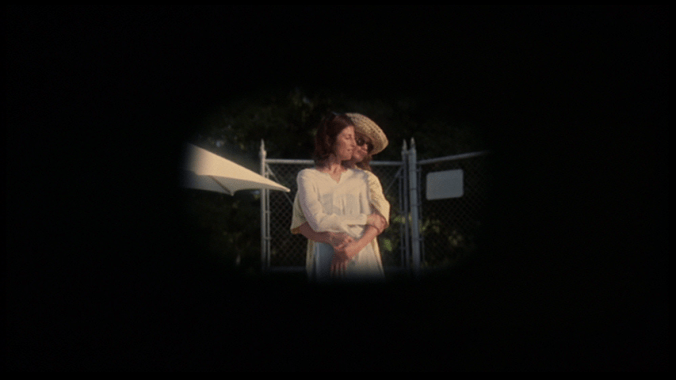
Watching the film in 2017, I was struck by how progressive its attitudes towards sex, relationships, and gender identity were for a film that was released in 1999. While it was far from the dark ages, with respect to representation in media, 1999 was still a much less enlightened time for the general public with respects to sexual diversity. I’m sure that watching this movie must have marked the first time I ever encountered the word “transsexual,” though it didn’t register at all then. The idea of a woman entering into a man’s body, experiencing his view of the world, but maintaining a feminine spark that can still be seen through the eyes, as Maxine asserts that Lotte’s can, suggests a gender fluidity rather than a binary relationship. While this is obviously not the way that a transgendered person in the real world exists, the experience does lead to a revelation in Lotte, and a turning point in her character, as she articulates her own chosen identity and decides to actively pursue a happier and more satisfying relationship. Maxine and Lotte’s relationship, which is eventually achieved without a physical male surrogate, is the healthiest one in the film, and their ultimate production of a child and happily-ever-after ending stands in stark contrast to the loveless marriage that Lotte and Craig were both searching for an escape from. Craig, who attempts to be domineering in his relationship with Lotte and manipulative in his relationship with Maxine, is ultimately rejected by both and ends up alone, forced to watch their happiness through the portal, as it connects to the consciousness of Maxine and Lotte’s love child (conceived through Malkovich), Emily.
malkovich 6

The other aspect of the film that interested me on this rewatch was its treatment of celebrity. In 1999, famous actors and other celebrities existed in a world that was out of reach to the common person, accessible only through tabloid newspapers and gossip shows. Now, in an age of pervasive social media, the film’s portal into John Malkovich’s brain has been actualized through celebrities’ Twitter feeds, and Instagram videos. Fans now have a window into their favorite celebrities’ private lives. Being able to actually see through the eyes of, and effectively inhabit, a famous person would still probably be a valued commodity for some, but with access to our idols’ innermost thoughts and feelings on a stream-of-consciousness Twitter feed, it seems less attractive. Want to know what life is like for John Malkovich? Follow his Twitter feed and find out his pet’s favorite Starbucks order.
malkovich 5

Despite all of that, Being John Malkovich never really feels dated. The film is nearly 20 years old, but aside from the obvious advancements in technology, it is set in such a unique world that, rather than reflecting the time in which it was made, it seems to exist just outside of time. The film’s satire of Hollywood culture and the arts scene in general still ring true, and the film’s central theme of longing to break out of one identity and into another is a universal concept. Ultimately, underneath all of its cerebral meta- trappings, Being John Malkovich is a love story, and a story about the lengths to which these characters will go to make themselves feel lovable. If the film’s strange setting is a bit alienating, its emotional core, and the performances of its cast shine through and give the viewer something to cling to. I hadn’t watched this movie in many years, and while it still doesn’t rank among my very favorite Kaufman films, I could understand why it might for others. The building blocks of his future scripts are in place here, and many of the themes that he continues to explore in his films to this day are fleshed out quite well in Being John Malkovich. I’ll probably end up going back to this movie with more frequency than I have in the past.

Barton Fink

Barton Fink (1991)

Dir. Joel & Ethan Coen

Written by: Joel & Ethan Coen

Starring: John Turturro, John Goodman, Michael Lerner


The Coen brothers have made some of my very favorite films. Their filmography is notable in both its depth of quality and its stellar high-end pedigree. Even their lesser regarded films are typically enjoyable, and a cut above the standard Hollywood fare, while their best films are often regarded as classics. Barton Fink falls into this latter category, continuing a string of early offbeat classics that would set the tone for the brothers’ careers going into the 1990s. Though it may not be as widely seen as some of the Coens’ later films such as Fargo or The Big Lebowski, Barton Fink deserves consideration along with those films and others from throughout the brothers’ thirty year run of filmmaking as one of the best in their catalog. The film continued to establish the brothers as visionary talents with a knack for crafting intricate, genre-bending screenplays, as well as furthering their unique and distinctive visual storytelling style. Barton Fink is a neo-surrealist nightmare of a comedy and it often vies for the top spot in my ever-shifting list of favorite films by the Coen brothers.

Though it might get overshadowed by some of the obvious high points of the Coens’ catalog that surround it, Barton Fink is an offbeat masterpiece in its own right. The brothers wrote the screenplay while taking a break from working on their third feature, 1990’s Miller’s Crossing, and the two films could not be more different in tone. A period piece, Barton Fink is set in 1941 and follows the titular Barton Fink (Turturro), a successful New York playwright who attempts to transition his career to writing scripts in Hollywood. Barton arrives in Hollywood and takes up a room at the dilapidated Hotel Earle, where he struggles to begin work on the wrestling picture which he has been assigned by Capitol Pictures. Barton is nebbish and anxious, a typical East coast intellectual, who worries that his relocation to sunny California and the shallow material he’s asked to work with for the studio will sever his connection to the common man and hinder his quest to bring a more perfect art form to the theater. One of the reasons for Barton’s inability to work is his loud and boisterous neighbor at the Earle, Charlie (Goodman), a salt of the earth insurance salesman who is a perfect foil for the high-minded Barton. Eventually the two strike up a friendship, with Barton fetishizing Charlie’s experience as an everyday working man. The film’s final third takes a dark turn with Barton becoming embroiled in a murder investigation, while Charlie is revealed to be an at-large serial killer with a penchant for removing his victims’ heads. In the end, Barton finishes his screenplay but is ultimately blackballed by his studio, and he is relieved of the pressure of the detectives who are investigating him by the nightmarish return of Charlie (or “Madman” Mundt, as he is referred to by the detectives) who becomes evil incarnate when he torches the Hotel Earle and leaves a trail of bodies in his wake.

barton fink 5

Already known for creating films that are difficult to slot into any one particular genre or style of filmmaking, Barton Fink is probably the Coens’ most unclassifiable film to that point in their careers. While they had explored dark, anarchic comedy in Raising Arizona, that film lacks the elements of surrealism and outright horror that are present at times in Barton Fink. The film also features much more narrative ambiguity and opens itself up more to its viewers’ subjective interpretation than any of their previous films. Miller’s Crossing presents quite a tangled web of narrative interconnections and plot twists, but careful viewers can navigate the film’s twists and turns to arrive at a sense of narrative completion and truth. Barton Fink, however, doesn’t offer up a clear narrative solution, leaving its viewers instead with a series of unanswered questions and a plethora of potential clues that could explain some of the film’s stranger elements. What I love about Barton Fink is that it is so amorphous, and it’s a great film to watch again and again, refining your own personal theory to explain how it is that Barton experiences the things he does in the Hotel Earle. I’ve been doing so for the last 15 years, since first seeing the film.

My personal theory about Barton Fink is that Barton died at some point on his journey from New York to Los Angeles, and that the Hotel Earle is some sort of Purgatory, where the residents must be judged and tested to determine their ultimate fate in the afterlife. Barton’s cross country journey is elided, replaced by a brief shot of a wave crashing upon a rock that will become symbolically important later in the film, and from the outset his stay at the Hotel Earle supports the theory that there may be something more than meets the eye about the tumbledown, gloomy hotel. Upon check-in, Barton is greeted by Chet (Steve Buscemi), the hotel’s concierge, who ascends a set of stairs and emerges from a trap door to ask Barton whether he is a “trans or a res,” meaning a transient or resident guest. Barton replies that he will be staying “indefinitely.” The hotel’s lobby is dim, populated by many overstuffed arm chairs, illuminated by very few stray beams of sunlight. Barton’s room is bare, aside from a picture on the wall of a girl sunbathing on the beach, staring into the horizon as the tide comes in. The sunny image in the picture represents an oasis in the otherwise grim room. The hotel is decorated in drab greens and yellows that call to mind rot and sickness, and the wallpaper in Barton’s room peels, revealing oozing, sweaty walls. The shoes left at the door of each room for nightly shining seem to suggest a hotel full of guests, but Barton and Charlie are the only ones we actually see, giving the Earle the feeling of a haunted house. Barton’s interactions with the hotel’s staff, whether with Chet or with Pete (Harry Bugin), the hotel’s morose elevator operator, are exceedingly surreal, consisting of clipped dialogue and frequent non-sequiturs, as if Barton’s reality doesn’t quite match up with theirs.

barton fink 2

Barton’s physical appearance throughout the film also supports this theory that he may be dead. Upon arriving in Los Angeles, Barton’s physical and mental state appear to steadily deteriorate until he is able to finish his screenplay. He is plagued by ever-worsening boils, which he explains away as mosquito bites. Though it is mentioned that there are no mosquitoes in Los Angeles as they are most commonly found in swamps, there is clearly a mosquito in Barton’s room, again indicating that something is not right about the Hotel Earle. He is also plagued by not only writer’s block, but intense anxiety, bordering on paranoia, as he hears sounds through the walls at the hotel. He becomes prone to extended bouts of daydreaming as he stares at the picture on his wall, fantasizing about escaping from the gloomy confines of his room at the Earle. Even outside the hotel, Barton is often shown anxiously sitting through meetings with studio executives, his pocked face glistening with sweat, giving him the pallid look of a corpse.

After a lover is found inexplicably dead in his bed, Barton’s paranoia turns to full on mania as he asks his only friend, Charlie, to help him dispose of the body and remedy the situation. Charlie leaves town, assuring Barton that everything is taken care of with regards to the body, and asks him to safeguard a package for him which we must later presume contains the head of the woman who was killed in Barton’s bed. Barton is left weeping in his room with the package and his unfinished script. As he is battling his writer’s block, Barton opens his desk drawer and finds the ubiquitous hotel room Gideon’s Bible. Opening the Bible to a random page, Barton discovers this verse from Daniel describing the demands of a King: “…Nebuchadnezzar answered and said to the Chaldeans, I recall not my dream; if ye will not make known to me my dream, ye shall be cut in pieces…” Turning then to the book of Genesis, Barton sees the opening lines of his own screenplay as the first two verses in the Bible. This juxtaposition of Barton’s own work with the verse in the Bible indicates that finishing his screenplay is to be the test he must pass to depart from the Hotel Earle. The King’s demand to “make known to me my dreams” echoes the demand of Capitol Pictures studio head, Jack Lipnick (Lerner), that Barton turn in a crowd-pleasing, studio friendly wrestling picture, rather than the sort of high art that Barton aspires to. This revelation, coupled with Barton’s encounter with the detectives, Mastrionotti (Richard Portnow) and Deutsch (Christopher Murney), who are on the hunt for Charlie, give him the impetus needed to finish his screenplay, which he does in one bout of inspired writing.

barton fink 6

The final scenes of Barton Fink drive home the theory that Barton and Charlie are playing out a waiting game in Purgatory, while they attempt to finish out some aspect of their life’s work. After returning to the hotel from celebrating the completion of his screenplay, Barton finds the detectives in his room, rifling through his papers. They question Barton about his role in the murders, as another Capitol writer whom Barton had been acquainted with and admired has been found dead, and handcuff him to the bed, which is still soaked with blood. Before they can arrest Barton, however, the detectives leave the room to investigate smoke and heat pouring in from the hallway. They’re greeted by Charlie, who is wielding a double barrel shotgun, which he uses to quickly dispatch Mastrionotti. Charlie then charges down the hallway at Deutsch, bellowing “I will show you the life of the mind,” followed by a wall of fire. The hallway engulfed in flames around them, Charlie shoots Deutsch and then turns into Barton’s room for one last chat.

barton fink 8

Charlie settles into the chair at Barton’s desk with the world-weary air of a man who has spent one long day too many at the office. When Barton confronts Charlie about his true identity as Madman Mundt, Charlie launches into a monologue that begins, “Jesus, people can be cruel. If it’s not my build, it’s my personality,” and in which he lays out his justification for his killings. Charlie feels sorry for the people of the world, sees their day-to-day struggles, and thinks that he can best help them by giving them assistance in sloughing off their mortal coil. He laments that he has no one to have mercy on him and help him out in a similar fashion. “You think you know pain?” he says to Barton, “You think I made your life Hell? Take a look around this dump. You’re just a tourist with a typewriter. I live here, Barton. Don’t you understand that?” Charlie has never been able to leave the Hotel Earle; the best he can do is transform it through his violence. While the hotel was once a Purgatory, Charlie has unleashed Hell on Earth, and he intends to stay there. He frees Barton from his handcuffs, and then tells him that he’ll be next door if Barton needs him. As Barton leaves his room with his finished script and Charlie’s package in tow, we see Charlie step through the inferno into his hotel room, symbolically passing into the afterlife.

Though his script is ultimately rejected, and Lipnick threatens to keep him in a professional purgatory by forcing him to work out his contract for Capitol Pictures while refusing to produce any of his scripts, Barton, too, passes into the afterlife at the film’s end. After the rejection, Barton is walking along the beach, still carrying Charlie’s package. There is a shot of a wave crashing over a rock that directly mirrors the shot that is used as a transition earlier in the film when Barton journeys from New York to Los Angeles. I believe these shots symbolically represent his character entering into a new state of being, both passing from life into death and his Purgatory state at the Hotel Earle, and then passing from Purgatory into some sort of Heaven on the beach. Barton finds a place to settle on the beach, and he is approached by a beautiful woman who sits down in front of him. “You’re very beautiful,” he asks, “Are you in pictures?” To which she replies, “Don’t be silly,” as she turns from him to stare out across the waves, raising her hand to shield her eyes from the Sun, and assuming the pose of the woman in the picture in Barton’s room. The film ends with the two of them sitting on the beach, Barton having finished his journey and finally ended up in the oasis depicted in his picture.

barton fink 9

Barton Fink is so rich with symbolism and literary and textual references that one could easily come up with several other plausible theories to explain the events that take place in this unusual film. In fact, my preferred analysis is actually largely unsupported by interviews with the Coen brothers that I’ve read, and their stated desire to make a sequel to the film set in the 1960s runs directly counter to my supposition that Barton is dead. However, the beauty of a film like Barton Fink is that it is so open to interpretation and so varied in its themes that it can be exactly the type of film that any given viewer might be looking for on any given viewing. There are multiple allusions to creeping fascism and the United States’ eminent entry into World War II throughout the film if one chooses to read it in that way. There is certainly evidence that everything did, in fact, happen as it was depicted and that the world of Barton Fink is just supremely strange. My own interpretations of the film have changed with time, and could likely change again, but that’s always been a part of the fun of it for me. The film is also entertaining, funny, and populated with incredibly strong performances from its cast so that if one doesn’t care to dive deep into its narrative looking for deeper meaning and continuity, it can still be an impactful and memorable viewing experience. As I mentioned earlier, Barton Fink is somewhat lesser seen than other Coen brothers films, but it is certainly not of any lesser merit, and if you haven’t seen it yet I would suggest remedying that as soon as possible.

Animal House

Animal House (1978)

Dir. John Landis

Written by: Harold Ramis, Douglas Kenney, and Chris Miller

Starring: John Belushi, Tom Hulce, Stephen Furst, Mark Metcalf


Animal House is, without question, one of the most influential and best comedies of all time. An entire subgenre of comedy that dominates the cinema to this day was largely born from the DNA of this seminal classic. Animal House is the first film from the National Lampoon, the humor magazine that would go on to expand into a media empire throughout the 1970’s and 80’s, and it is the distillation of the brand of humor that that magazine would come to represent over its first decade of existence. The film’s creators were already stars in the niche world of underground comedy, but Animal House launched the careers of Harold Ramis and John Landis who would go on to make some of the most iconic comedies in the history of film in the next decade. It also marks the first feature film performance by the great John Belushi. All that being said, I never watch Animal House anymore, and I don’t think I have sat down to watch the whole movie in nearly two decades.

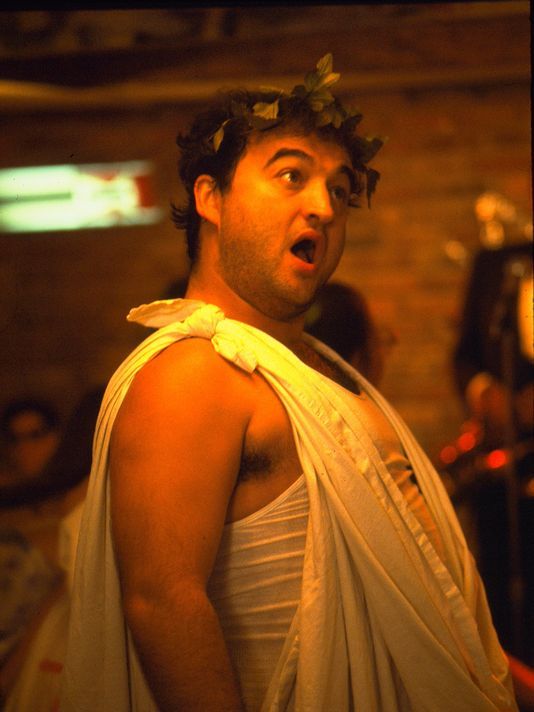
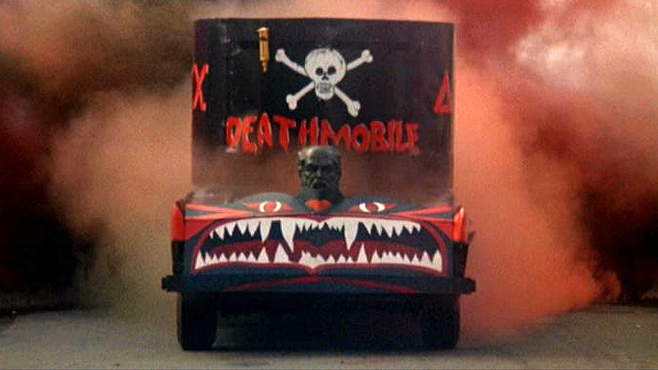
It isn’t that I ever disliked Animal House. It was a staple of a mine and my friends’ movie rotation during high school, along with other classic teen movies such as Fast Times at Ridgemont High or Say Anything. Back then I could quote the movie from memory, and I aspired to party as hard and be as cool as Bluto (Belushi) and the Deltas. I also appreciated the movie for its historical importance. I was (and am) a big fan of raunchy comedies, and I knew that without Animal House, there would be no P.C.U., Dirty Work, or Road Trip. The Deltas sticking it to the system at Faber College through partying and pranking is a familiar trope in comedy now, and Animal House may not have completely invented the format, but it certainly crystallized and advanced it. As perfect a comedy as it may be, however, Animal House loses its punch the further away from adolescence one becomes. I will never not laugh at Bluto’s impression of a zit, or at Neidermayer’s (Metcalf) over the top sadism, but I don’t ever feel the need to watch the whole movie anymore.

Animal House 1

That’s probably because, as a movie centered on adolescent hijinks, Animal House is designed to primarily appeal to a certain demographic of the general public. More than its sophomoric sense of humor, however, it’s the period setting of Animal House that I really have trouble relating to anymore. Though it came out in the late 1970s, the movie is set in 1962, when college men were expected to wear blazers and pledging a fraternity was the pinnacle of social networking. The period setting doesn’t at all hinder the humor in Animal House, which is commendable. So often, humor can be topical or not translate from one generation to the next, but Animal House could really be transposed to just about any era, largely keep the same jokes, and it would be a successful comedy. There’s just something about the film that doesn’t really resonate with me the way that it used to. I can recognize its importance in the genre, but actually sitting down and watching the film for this post was a bit of a chore. I laughed like I always have, but over the years my desire to watch a full length feature that is so focused on physical comedy and gross-out humor has diminished greatly.

For me, Animal House and films of its ilk work best in little pieces. The film is somewhat elliptical, with many scenes simply existing to highlight one joke, and I think some of the film’s best moments are just as funny when taken out of the context of the larger film. My very favorite scene in the film is the scene in which Bluto and D-Day (Bruce McGill) convince Flounder (Stephen Furst) to put Neidermayer’s horse in Dean Wormer’s (John Vernon) office. After locking the horse in the office, the three are having a laugh when D-Day hands Flounder a pistol and tells him to “finish the job.” Though he doesn’t know the gun was loaded with blanks, Flounder can’t bring himself to kill the horse, so he fires into the air. Of course, the horse drops dead of a heart attack anyway, and the reaction shot of D-Day and Bluto is priceless. Later in the film, a worker is briefly shown measuring the door to the office and measuring the space between the dead horses upturned legs before revving up a chainsaw. It’s honestly a fairly one-note joke, but the absurdity of the situation has always stuck with me and the idea of sawing a dead horse in half to get it out of an office never fails to crack me up, no matter how many times I see the scene.

Animal House 5

Animal House is full of scenes just like that one. Hilariously absurd situations and non sequiturs that don’t advance the film’s plot but provide some of the most memorable jokes and the biggest laughs. Think about Bluto casually spying on the sorority girls’ topless pillow fight and then winking at the camera, or about the record scratch moment when the Deltas walk in to the Dexter Lake Club. These are the scenes that make the film the classic that it is, so when I think back about Animal House I almost think of it more as a sketch comedy than as a feature film. Its roots in the short form satire of the National Lampoon are obvious. Undeniably, the film is a comedy classic, and as I mentioned, was hugely influential in shaping the direction of mainstream comedy filmmaking, but as a film it leaves something to be desired. Landis and Belushi would team up again in 1980 to bring Belushi and Dan Akroyd’s “Blues Brothers” characters to the big screen, in a film that works much better on the whole, for me. With Animal House, however, the whole does not always equal the sum of its parts.

American Splendor

American Splendor (2003)

Dir. Shari Springer Berman, Robert Pulcini

Written by: Shari Springer Berman & Robert Pulcini (based on the comics by Harvey Pekar)

Starring: Paul Giamatti, Hope Davis, Harvey Pekar


American Splendor is a biopic about the life and work of Cleveland cartoonist Harvey Pekar, the creator of the comic series of the same name. The comic “American Splendor,” which ran from 1976 to 2008, follows the mundane everyday lives of Pekar and his friends and coworkers. It contains Pekar’s musings on life and is presented in his cynical, often miserable, tone, with the illustrations being provided by some of the biggest underground cartoonists of the 70s and 80s. The film adaptation is a genre-hopping picture that presents primarily the period of Pekar’s life in which he was writing the series. It intertwines a dramatized version of Pekar’s life in which he is played by Paul Giamatti with interviews with the actual Pekar, his wife, and friends. Many scenes from the film are direct adaptations of panels from “American Splendor,” sometimes even fading in or out from the illustrated panels.

I have fond memories of this film, having seen it shortly after its release, sometime in 2004. I wasn’t familiar with the comic series at the time, but I remember liking the film’s style and being very enamored with Pekar as a character, both through his actual interviews and Giamatti’s portrayal. I identified very much his persistent negativity. The documentary aspects of the film lent the dramatized storyline veracity, and I enjoyed watching Pekar be interviewed with Giamatti sitting in the background. The film goes out of its way to highlight its construction, which was intriguing to me. I liked being able to compare Giamatti’s performance with the genuine article. I was also intrigued by Pekar’s brand of blue-collar intellectualism. I probably watched the film a half dozen times between 2004 and 2007, or so.

american-splendor-2

I was disappointed that after not having seen it in probably a decade, American Splendor didn’t live up to my memories. The film’s varied style of presenting its story, an aspect of it that I had previously enjoyed, was the primary reason for me not connecting with it this time around. Stylistically, I was fine with the introduction of animation and panels from “American Splendor” in the narrative portions of the film, but I felt that the documentary and narrative portions just didn’t mesh. I think that American Splendor works better as a documentary that it does a narrative film, and the presence of the actual Harvey Pekar overshadows the film’s narrative. Springer Berman and Pulcini use Pekar as a narrator throughout the film, both in voice over and in filmed interviews. His character and commentary are so engaging that I found myself wanting more of that, which took away from the film’s narrative segments. I felt that there were the makings of a very good talking head style documentary and a pretty good comedic biopic contained with American Splendor, but I couldn’t quite reconcile the two into a greater whole.

I’m not surprised that the documentary portions of American Splendor shine through, because the film is Springer Berman and Pucini’s first foray into narrative cinema. Previously they had directed several documentaries, primarily about Hollywood subjects. The husband and wife team craft the narrative well, however, and the film, which was shot on location in Cleveland and its suburbs, feels authentic. Giamatti’s performance also helps to elevate the film’s narrative portions, as he captures Pekar’s essence perfectly. He embodies Pekar’s pessimism with his hunched, shambling gait and his raspy line delivery. This role was one of Giamatti’s first breakthrough performances, and it’s clear why he gained the acclaim he did for it. A lesser talent would probably not have been able to stand up in the shadow of the charismatic and funnily sardonic Pekar. My biggest complaint with the narrative portions of the film is that the narrative often feels directionless. I don’t know if this was a conscious artistic decision to mimic the slice of life style of “American Splendor,” but the film felt lacking in motivation. It was enjoyable to watch Giamatti growl and mutter his way through the film, but outside of some occasional domestic turmoil with his wife, Joyce (Hope Davis), there was very little narrative tension or conflict. The film’s third act focuses on Pekar’s diagnosis and subsequent battle with lymphoma, but it feels more like an epilogue than a continuation of the story that the film had previously been telling. Pekar beating cancer should feel like a narrative payoff, a big win for the hero of the story, but instead it had the same significance of any of the other events depicted in the film. I don’t mean to sound overly critical of the film, because it is enjoyable enough. I do think it would have worked better as a documentary with inserts from Pekar’s cartoons and many media appearances. As it is, American Splendor feels a bit like a jumbled mixed-media collage. I think there could be many reasons for this stylistic choice, but it ultimately doesn’t work for me.

american-splendor-1

While I likely won’t be rushing to watch American Splendor anytime soon, rewatching it has made me realize how influential the film was in developing some of my literary interests without me even realizing it. A few years after moving to Pittsburgh, I was finally able to track down an “American Splendor” anthology at my local library, which I eagerly read and thoroughly enjoyed. From there it was a short leap to discovering the novel Post Office, and Charles Bukowski became one of my favorite writers during my early- and mid-twenties. In the years after dropping out of graduate school, I sank myself into my work as a bartender and I had a lot of trouble reconciling my professional career with my latent desire to continue academic or creative pursuits. In Bukowski and Pekar, though I didn’t realize it at the time, I had found kindred spirits. Working class intellectuals who created great art not in spite of their circumstances of employment or their lack of formal training, but because of it. I don’t have anywhere near the talent of these writers, but it’s good to remember that it’s never too late to get started again. Though Bukowski eventually left his job at the post office, he didn’t become a full time writer until his forties. Pekar worked as a filing clerk for the Cleveland VA hospital for nearly 40 years, finally retiring in 2001, well after he had received much acclaim and fame for his writing. It’s impossible to imagine the work of either without their professional experiences and working class sensibilities. I haven’t thought about Harvey Pekar or American Splendor in years, but his depictions of the day-to-day lives of everyday people, and his elevation of their mundane existences to poetry, have stuck with me and shaped the way I interact with the world today.

Almost Famous

Almost Famous (2000)

Dir. Cameron Crowe

Written by: Cameron Crowe

Starring: Patrick Fugit, Kate Hudson, Billy Crudup, Jason Lee, Frances McDormand


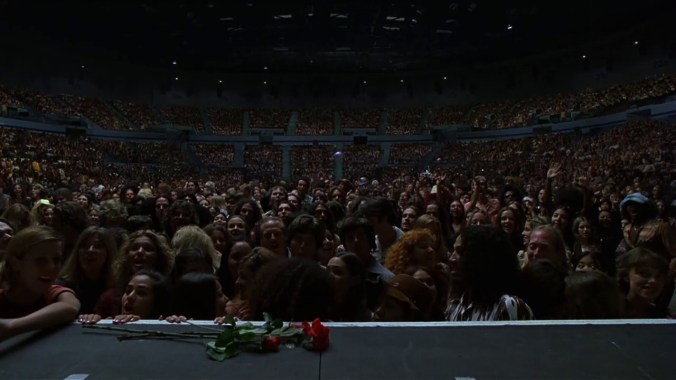
I was introduced to Almost Famous at exactly the perfect time in my life. I was a sophomore in high school when the girl who would go on to be one of my first serious girlfriends showed me this movie for the first time. It must have been 2001 or early 2002 when we watched this on DVD in the basement of my parents’ house. We made out through a lot of the movie so my memories of that first viewing are fond, if incomplete. We were 16 years old and Cameron Crowe’s love letter to 70’s rock and his own adolescence seemed awfully relatable at the time. Based on Crowe’s real life touring with groups like The Allman Brothers and The Who while he was a teenage writer for Rolling Stone, Almost Famous seemed like it had been made specifically for me. I played in several bands with friends throughout middle school and high school, none of which ever got off the ground or lasted much longer than six months. Almost Famous was just the sort of rock and roll fantasy that a teenage music nerd such as myself would fall in love with.

Crowe’s stand in in the film is William Miller (Fugit), a 15 year old aspiring rock journalist living in San Diego with his over protective mother (McDormand). Early in the film, William meets his idol Lester Bangs (Philip Seymour Hoffman in a brief, but great cameo) who gives him his first opportunity to write for a real rock magazine, covering a Black Sabbath show. When William can’t get into the venue despite his press credentials, he meets Penny Lane (Hudson) a groupie who sneaks him backstage, and introduces him to the band Stillwater. After conning his way into covering up-and-coming band Stillwater for Rolling Stone, William hits the road along with Penny and the band. While on tour, he falls in love, witnesses the interpersonal conflicts of a band that he admires, and experiences the excesses of the 1970s rock scene.

almost-famous-2

The thing that Almost Famous does so wonderfully is establish a sense of place and time. The film’s soundtrack is crammed with 70s rock classics. The costumes and set dressing are period appropriate. However, the 1970s that Almost Famous evokes is a fun-house mirror reflection where the freaks and the burnouts are kings. The crowded hotel lobbies that William must navigate on tour are full of rock stars and their hangers on, all ready to follow their favorite group to the next tour stop, hoping to delay the onset of reality for just a few more shows. As a journalist, William’s role is to document the bacchanal but, like the audience, he can’t help but find himself wrapped up in it. Like the film itself, the world of the tour is immersive, and many of the film’s characters are happy never to leave it, following one band, then another, never wanting to return home.

The realism of Almost Famous is also bolstered by its deep and talented cast. Crowe has said that nearly everyone in the film is based on a real person that he knew in the 70s rock scene, and it shows. Even characters with just a few scenes are memorable, and fully fleshed out. I already mentioned the late Philip Seymour Hoffman’s cameo as Lester Bangs, but in just about ten minutes of screen time, Hoffman turns in one of his best performances as the “uncool” rock critic who William so admires. Hoffman’s performance shows the chain smoking, mustachioed Bangs in turns manic and enthusiastic about rock and roll, and cynical about it, forecasting its death. Hoffman elevates what could have been a bit part into one of the more memorable elements of the film thanks to his nuanced, subtle performance. Performances like this abound in Almost Famous. Frances McDormand stands out as Elaine Miller, William’s mother, even though most of her scenes are phone conversations. Often without anyone else on screen to play off of, the concern and anxiety that her character is feeling are palpable. Crowe inserts a few shots of McDormand sitting alone after her phone conversations with William that are simply heartbreaking. The mother character could have been shrewish, or used mostly for comic relief, as is sometimes the case in the film, but the emotion that McDormand puts into her performance made me take notice of her character in particular on this rewatch.

almost-famous-4

The film’s main cast is also deserving of commendation, particularly Billy Crudup and Jason Lee as Russell Hammond and Jeff Bebe, respectively. They play the guitarist and lead singer of Sweetwater, whose creativity and frequent personal clashes fuel the band. Crudup plays Hammond as equal parts con man, mystic, and rock god. He takes William under his wing during the tour, but steadfastly refuses to give him an interview for his story. As the film goes on, Russell and William develop a friendly rivalry over their mutual admiration of Penny Lane. Lee’s Jeff Bebe describes himself to Hammond as, “the you they get when they can’t get you,” underlining the tensions between the two as Jeff chafes at his second banana role to Russell. Both actors turn up their lothario charm for their roles, but they play the rockers in different ways. As mentioned, Crudup plays Russell as some sort of mystic, tapped in to a spiritual connection with the music that he makes so much that he can’t relate to average people. He can go from charming warmth to drug-fueled rage at a coin flip, and Crudup is convincing in both modes. Lee, on the other hand, plays Bebe as an affable, if bristly, uncle to William. He keeps the journalist at arm’s length, referring to him as “the enemy,” but is ultimately far more forthcoming than the seemingly more affectionate Hammond. As the group’s lead singer, Bebe’s personality is more outwardly engaging, and Lee’s upbeat performance style is perfect for that.

It’s unfortunate, but understandable, that the teen actors cast in the film’s leads don’t quite live up to the high bar set by their older counterparts. Patrick Fugit is passable as William, though there doesn’t seem to be a lot of acting for him to do. On the surface, his character learns and grows quite a bit from the beginning of the film to the end, but his performance rarely reflects this. Fugit does a fine job of embodying William’s starry-eyed demeanor at getting to spend time among his idols, but when the film asks him to ramp up the emotion and get angry, he falls short. His line delivery is stilted and he doesn’t have the physical presence in the role to carry the emotional weight that the script sometimes asks of him. This may be a result of both the character and the actor being a teen interacting with adults, so they are both ultimately unable to convey a full adult range of emotion. It’s not that Fugit is bad in the film, he just often seems overmatched when paired with the more charismatic Lee and Crudup.

almost-famous-5

Kate Hudson fares much better as Penny Lane, the famed groupie and founder of the “Band Aides.” While William is taking in this world for the first time, Penny is a season veteran, and Hudson, who grew up in a famous family, lends the character a world-weariness that feels earned. Hudson plays Penny Lane with supreme confidence throughout the first half of the film. She adopts a matronly position among the other Band Aides and William, and acts a sort of tour guide for the audience. Her youth belies her experience, and she exudes authority. However, by the end of the tour, Penny Lane and her Band Aides are left behind by the band, and the cracks in Penny’s confident façade start to show. Hudson’s last few scenes in the film are impressive, as she lets just a bit of Penny’s sad brokenness shine through those cracks. The scene where William finally tells Penny that she isn’t going on the rest of the tour with Stillwater because Russell sold her, along with the rest of the Band Aides, to Humble Pie for $50 and a case of beer is a perfect example of Hudson’s performance range in the film. She turns her head away from the camera, obviously hurt, and then turns it back to look at William, wiping away a single tear and quietly asks, “What kind of beer?” as a smile starts to bloom on her lips. Penny’s heart is breaking and that single tear contains a lifetime of sadness, but it’s all the vulnerability she can allow herself. Penny Lane could have been a concept, or a cliché, rather than a fully realized character. In fact, most of the men who claim to be in love with Penny throughout the film only know her as a cliché and are in love with the concept of Penny. It’s in these small scenes shared with William that Hudson’s performance lends Penny a well of emotional depth.

As is probably abundantly clear by now, I really enjoy Almost Famous. I went through a big Cameron Crowe phase during high school, and Almost Famous was among my favorites of his at the time. As I mentioned, it spoke to the teenage music nerd in me. Despite all of his obvious flaws, I wanted to be Russell Hammond, although I would have settled for being William Miller. Penny’s bohemianism and easy charm reminded me of my girlfriend at the time. She was an actress, and she was prone to the same sort of poetic daydreaming that Penny was. I wouldn’t have been surprised if she had asked me to go to Morocco with her, as Penny does with William. Almost Famous caters to that teenage impulsiveness, the feeling that if you can join the circus or a rock and roll band, you might never have to grow up. Of course, somewhere along the way I did grow up. I’m not sure that I have watched this, or any other Cameron Crowe film, since turning 25.

almost-famous-6

About three months ago, however, I purchased the extended cut of Almost Famous on Bluray. It was on sale an Amazon, and I was curious to see if the movie would hold up to my fond memories of it from adolescence. I was honestly surprised by how well it did, in fact, hold up. I may enjoy Almost Famous more now than I did then. Watching the film as an adult, I was less caught up in the romance and the spectacle of it all. I keyed in on the small performances, like Frances McDormand’s or Jimmy Fallon’s fantastic cameo as the band’s potential new manager. I appreciated the depth that underlies all of the showier aspects of the film. When I was young, I wanted to be Russell Hammond, but now I know that I was far more destined to be Lester Bangs. My role is to be the critic, feeding off of the art of the true creatives, and hoping that maybe my own prose will help someone to find their way to a new favorite film or rediscover an old one. Working on this project has made me much more comfortable in that role, one that I had a lot of trouble accepting and growing into as a younger writer. Brushing off old favorites like this one is a lot like trying on a favorite band T-shirt from your youth. It might not fit exactly the same way, because you’ve changed, but there’s still something familiar and comfortable about it because of all the memories you’ve made wearing it. I’m really beginning to enjoy digging through that old dresser.

Adaptation.

Adaptation. (2002)

Dir. Spike Jonze

Written by: Charlie Kaufman & Donald Kaufman (from the novel The Orchid Thief by Susan Orlean)

Starring: Nicolas Cage, Meryl Streep, Chris Cooper


Charlie Kaufman is, hands down, my favorite screenwriter. He’s also one of the few working screenwriters who has developed into a true auteur, almost immediately establishing his singular, idiosyncratic voice in his first few feature scripts. Being John Malkovich announced the arrival of both Kaufman and director Spike Jonze as major level talents, but it was their second artistic pairing, Adaptation., that revealed the depths of Kaufman’s narrative dexterity. Adaptation. was also the film that introduced me to Kaufman’s cerebral brand of storytelling, and hooked me on his neurotic genius.

Famously born out of Kaufman’s real life writer’s block while attempting to adapt the Susan Orlean novel The Orchid Thief, Adaptation. is, instead, a journey into the writer’s head, exploring the process of adaptation and writing itself as Kaufman inserts himself into his own screenplay. The Charlie Kaufman (Nicolas Cage) of Adaptation. is a caricature of the real life Charlie Kaufman, highlighting the screenwriter’s awkwardness and insecurity as he struggles to find an entry point into his film adaptation of The Orchid Thief. Cage also plays Kaufman’s fictional twin brother, Donald, who is also working on a screenplay, and who serves as a foil for the fictional Charlie. The film’s narrative is highly complex, layering the story of Kaufman’s writer’s block with scenes from the novel, which depict New Yorker journalist Susan Orlean’s (Meryl Streep) meeting, and subsequent obsession with, orchid hunter John Laroche (Chris Cooper). By the film’s end, Kaufman has crafted an ouroboros of a story, self-referential to the point of collapsing in on itself in a final act that is both intentionally clichéd and artificial, and also genuinely cathartic.

adaptation-2

As I mentioned earlier, Adaptation. was the film that really introduced me to Charlie Kaufman. I had seen Being John Malkovich on Comedy Central sometime prior to having seen Adaptation., but it was the latter film that made a real impression on me. I picked it up on DVD (used from Blockbuster, as was my wont in those days) sometime in 2003 during my senior year of high school. I hadn’t seen the film in theaters, but I remembered reading a review in Newsweek magazine that detailed Adaptation’s creative genesis and my interest was piqued. What I experienced when I finally got my hands on a copy of Adaptation. did not disappoint and turned me into a lifelong devotee of the work of Charlie Kaufman.

I had seen plenty of movies that trod in waters of self-reference and that highlighted aspects of their own creation or artificiality, but none quite like this one. Adaptation. was a deep dive into the entire creative process. I had never before seen a film that put its stitches and seams so on display. I don’t remember my first viewing specifically, but I know that the first few times I watched the film, I still couldn’t quite put all the pieces together. The narrative jumps forward and backward in time, layering and stitching together the threads of its story, mixing together real people and fictional characters, all being presented in a highly self-conscious filmic representation. Adaptation. simultaneously draws the viewer in to witness its characters’ most vulnerable moments, while keeping them at a distance through a veil of artificiality. It’s complex, high-minded filmmaking, and it can be a lot to take in.

adaptation-7

With all of the high concept ins and outs of its screenplay, it would be easy for Adaptation. to veer off into the territory of navel gazing, or simply to fall apart under the weight of its own ideas. The thing that makes the film so successful is that it is so rooted in genuine human emotion. The performances of its three leads and Jonze’s warm treatment of their flawed, sometimes unlikable characters, keep the film emotionally resonant. Cage is great, and shows a fairly dynamic range in portraying both the neurotic, misanthropic intellectual, Charlie, and the brash, dopey populist, Donald. Donald so obviously looks up to Charlie, attending screenwriting seminars in an attempt to impress his famous brother. Charlie is embarrassed both by and for his twin’s earnestness. Though they spend the bulk of the film fighting and bickering, in fact much of the film’s humor is derived from Donald’s role as a mirror image to Charlie, the twins are there for each other by the end of the film. The love/hate relationship between the twins is the emotional heart of the film, and its final payoff is devastating. As Donald lies, dying, in the middle of the road, he and Charlie share a moment of true pathos. Charlie cradles his dying twin’s head and sings “Happy Together,” an ongoing motif in the film, in an attempt to keep him from heading in to the light.

Streep and Cooper are both excellent, as well, with Cooper winning an Oscar for his portrayal of Laroche the orchid poacher. He’s responsible for one of the film’s funniest lines. When describing the fleeting nature of his myriad interests throughout life, and in particular his decision to stop collection tropical fish, he says, “…One day I say fuck fish. I renounce fish. I vow never to set foot in that ocean again, that’s how much fuck fish.” Laroche’s finality is reflective of the film’s emotional message that love and happiness can be fleeting, so when you find some of either, enjoy it while it lasts and learn to let it go when it’s gone. Over the course of the film, we see Susan Orlean learn this, as she grows more and more enamored with Laroche. Early in her research for The Orchid Thief, we see Orlean drawn in by Laroche’s charisma, and his dogged pursuit of the ghost orchid, which she becomes obsessed with seeing. Pursuing the ghost orchid and Laroche is a metaphor for Orlean chasing her own moment of happiness and adventure, outside of her loveless marriage and stable New York City academic lifestyle. By the film’s end, she’s found that both the orchid and Laroche’s charm were illusory, and she is left, like Charlie, cradling the dead body of a man she loved.

adaptation-3

As I mentioned earlier, the film’s denouement is intentionally artificial and contrived. The brothers Kaufman follow Orlean to Florida where they discover she and Laroche’s secret stash of drugs, derived from the orchids that he grows in his nursery. When the twins are found out, Laroche and Orlean chase them into the swamps of the Everglades, intending to kill them to cover up the secret of the drugs and of their affair. Through a series of increasingly unlikely and violent twists, Donald and Laroche end up dead, while Orlean and Charlie are left in the swamp trying to pick up the pieces. In the hands of a less capable filmmaker, this narrative left turn could potentially unravel the whole film, and would certainly read as wholly unrealistic. However, Jonze directs the scenes masterfully, creating tension out of a patently absurd situation, and also wringing deep pathos out of both Donald’s death and Orlean’s realization that she is, in Charlie’s words, an “old, lonely, desperate, drug addict.” Even after watching her hunt Charlie and Donald through the swamp, it’s impossible not to feel some pity for Orlean, after having seen how empty the rest of her life is outside of the hunt for the ghost orchid. Jonze chooses to hold the camera on Orlean as she keeps Laroche’s bloody body from sinking into the swamp, letting the audience pick up her realization that everything she’d hung her hopes on was a lie.

I think this blend of the cerebral and the emotional makes Adaptation. Kaufman’s most fully realized work. It probably isn’t my favorite movie that he’s written, but it is likely his best. The script is Kaufman’s most complex, but the emotional resonance of Jonze and the spectacular cast give it a core for the wacky, high concept ideas to revolve around. Both in the film and in the script, Kaufman and his on-screen counterpart break all of the rules of screenwriting in their attempts to capture the essence of The Orchid Thief. While he may never truly unravel the mysteries of the novel, the Charlie Kaufman of the film does learn a profound lesson by the end. By the film’s close, Charlie has gained some perspective and is ready to finish up his screenplay. In a way, the screenplay has been his ghost orchid all along.

adaptation-6

It’s a wonder that a film as bursting at the seams with concepts as Adaptation. can wrap up so neatly, but the final shot is simple and perfect and it never fails to make me smile. With Charlie driving off to put the finishing touches on his screenplay, the camera lingers on a planter full of black-eyed susans as “Happy Together” by the Turtles fades in on the soundtrack. Gradually, the cars in the background begin to speed up as day turns to night in what is now a time lapse shot. The flowers close and then open as the Sun rises again, and the cars continue to speed by in the background. Something about those flowers opening and closing in the sped up time lapse, striving to get closer to the light, has always felt like a perfect ending to this film. It symbolizes the cycle of death and rebirth, the hope that each new day can bring. Adaptation. is a near perfect film, one of the best of the 21st century so far, and I love watching it every time I pull it off the shelf.

About Schmidt

About Schmidt (2002)

Dir. Alexander Payne

Written by: Alexander Payne (from the novel by Louis Begley)

Starring: Jack Nicholson, Kathy Bates, Hope Davis, Dermot Mulroney


About Schmidt feels like a forgotten movie. I rarely hear anyone mention it, and I know that it has been largely ignored by myself. I purchased this film on DVD sometime in 2003 from Blockbuster Video. At that time in my life, Blockbuster was a big source of DVDs for me. They would almost always have their used rental discs for sale at pretty good prices about a year after their release, due to the store’s policy of stocking heavily on new releases and then downsizing their stock once the movies got a little older. Myself and my best friend would go to the area stores and raid their used DVD bins, stocking up on 4 for $20 discs. Our logic was that since it was about $3 to rent a DVD for the night, if we could get a disc for $5 and watch it twice then we were getting a good deal. I’ve watched About Schmidt more than two times since purchasing it some 13 years ago, but not many. I remember enjoying the movie, but it never made a huge impression on me, however it has hung around in my DVD collection when I’ve lost or misplaced other, more cherished discs.

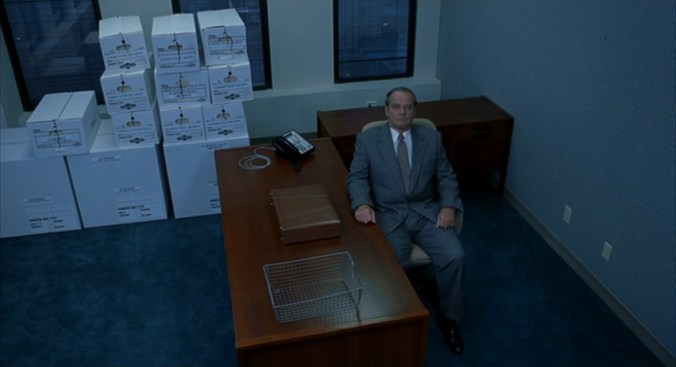
It isn’t so much that About Schmidt is a bad movie, it’s just that it’s a very bland one, and it hasn’t aged particularly well. The film begins with the retirement of Warren Schmidt (Jack Nicholson) from his job at a Midwestern insurance firm. Already put off by the loss of his familiar work routines, Warren is thrown into a full three-quarter-life crisis after the death of his wife Helen (June Squibb) and his subsequent discovery of her decades-long affair with his best friend. Warren’s solution to his crisis is to set out in the RV that he and Helen purchased to spend their retirement together, and drive cross country from Nebraska to Colorado to attend the upcoming nuptials of his daughter, Jeannie (Hope Davis). Along the way, Warren begins to learn more about himself, and about the people around him, as he starts to accept and adjust to his new life.

about-schmidt-1

Like the rest of Alexander Payne’s output, I feel About Schmidt is a fine piece of entertainment. It’s largely a light comedy, and it succeeds at hitting the beats it’s supposed to. The performances are solid across the board, with Nicholson and Kathy Bates receiving deserved Oscar nominations for their roles. However, my favorite performance was Dermot Mulroney as Randall, Jeannie’s ponytailed fiancée, who sells waterbeds, invests in pyramid schemes, and very obviously does not meet Warren’s approval. Randall is the film’s most obvious comic relief, but Mulroney never plays him as a total clown. Randall takes pride in his work, but he works to live rather than living to work. In this way, he provides a foil for the workaholic Warren, who sees Randall as a rube, unfit to wed his daughter. It’s telling that Warren made his living selling life insurance, a product that can’t be cashed in while the purchaser is still alive, versus the waterbeds that Randall sells, which are meant to provide comfort and enjoyment in the here and now. Halfway through the film, Randall approaches Warren with an opportunity to invest in what is “definitely not a pyramid scheme,” in an attempt to bolster his economic prospects in a changing economy, but also in an attempt to ingratiate himself to his future father in law, and to try to make an entry into the world of the upper middle class. Warren’s rejection of Randall is indicative of his classist attitude, as he repeatedly claims that Randall is “not good enough” to marry Jeannie, despite the obvious evidence that he makes Jeannie happy.

about-schmidt-2

While Warren’s classist nature is revealed through his interactions with Randall, the film’s voice over narration often reveals its tendency towards White paternalism. Early in his retirement, Warren sees a commercial for Childreach, which leads him to sponsor a six year old boy in Tanzania named Ndugu. Throughout the film, Warren writes letters to Ndugu, which are narrated in voice over. Warren introduces himself to Ndugu as his new “foster father,” and proceeds to use his letters to Ndugu as a way to vent his frustrations and project his unfulfilled dreams onto the child. The letters are presented comically in the film, and they are often genuinely funny, but the content reveals Warren’s basic inability to understand or relate to cultures other than his own. The fact that Warren finishes off his first letter by writing that he’s sure Ndugu wants to “hurry down and cash that check and get [him]self something to eat,” is funny, but it also underlines a paternalism inherent in the attitudes of otherwise well-meaning do-gooders. I feel that this sort of well-meaning sentiment applies to the film as a whole. It’s funny, the acting is good, and it is largely enjoyable, but the point of view that it represents as the norm likely wasn’t relatable to most average Americans on its release, let alone now, when American society has become more diversified and stratified than ever.

As I mentioned, About Schmidt simply feels outdated today. The film was released in December of 2002, into a much different America than the one that I live in today. The idea of a gold watch retirement from a career after 50 years of service with one company seemed antiquated to me in 2003, and feels even more so watching the film again today. While the prospects for a retiree in the early part of the 21st century may have seemed bright, the reality for most American workers just 15 years later is that there may be little chance for a true retirement of any sort. The type of middle class prosperity that Warren Schmidt is meant to represent in this film is largely unachievable for most American workers in the year 2016. And while the film is dubious, or even downright pessimistic, about the happiness that can be found through a life dedicated to the achievement of material and monetary wealth, the relative comfort that a man in Warren Schmidt’s position has been able to enjoy, even at the expense of a more meaningful marriage or relationship with his daughter, must be preferable to an existence spent working overtime for a degrading wage simply to provide the bare necessities for your family.

about-schmidt-3

The feeling that this film’s subject matter is distinctively out of step with the modern world is a problem that I’ve come to have with the films of Alexander Payne, in general. I have seen all of the films that he’s directed with the exception of his debut, Citizen Ruth, and they have always struck me as decent movies that leave little impression on me as a viewer. I have trouble relating to the Midwestern-ness of About Schmidt and Nebraska, and I also have trouble relating to the privilege and overbearing White-ness of Sideways and The Descendants. While I’ve enjoyed all of these movies at different times, and still think that they’re largely decent films with strong performances and are generally of high production quality, I can’t help but feel that they aren’t reflective of the face of America. As a viewer, I’m getting bored of the dominance of movies about White male elites, and I am hoping to see more representation of women, people of color, gays, and other marginalized groups in the films that get made. I’m hoping to see more films being made by people in these marginalized groups. There have been plenty of just fine movies made about the experiences of aging White men, and those movies will always continue to be made, but I hope that it isn’t at the expense of potentially great movies about characters who look less like the folks in Omaha.