Fists of Fury (The Big Boss)

Fists of Fury AKA The Big Boss (1971)

Dir. Lo Wei

Written by: Lo Wei, Bruce Lee

Starring: Bruce Lee, Maria Yi, James Tien


Bruce Lee’s first major film, The Big Boss (mistakenly released in America as Fists of Fury), is far from the best showcase of Lee’s star power and his physical prowess, but it does hint at some of the exciting things to come. The film was initially written as a vehicle for James Tien, but when a change in director was made, Lee was given the role of the main character, Cheng, and the film went on to become a massive success, turning Lee into the most famous martial artist in Asia. The Big Boss was the first step in relaunching Lee’s career in Hong Kong, as he had left America following the cancellation of the cult TV show Green Hornet, on which he played the sidekick, Cato. It was the first in a pair of films Lee would star in, and serve as the driving creative force behind, for upstart film studio Golden Harvest. Lee’s presence helped to give the new production studio credibility, while Golden Harvest offered Lee the creative control that he was unable to achieve while working in Hollywood. The Big Boss would be the worse of the two films that Lee would complete for Golden Harvest, but the partnership helped to break him into the Hong Kong cinema world in a big way. However, Lee’s earliest Hong Kong films only scratch the surface of the potential that he would later fulfill as an action star when given a proper budget and the opportunity to work with a more competent film crew.

fists of fury 3

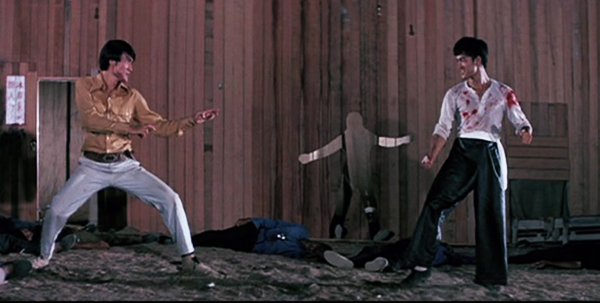
In the film, Lee plays Cheng Chao-an, who leaves mainland China to live with his cousin, Hsu Chien (Tien) in Thailand. Hsu Chien has secured Cheng a job working with the rest of his family at an ice factory, but when Cheng starts working at the factory, he realizes that the boss is using the ice blocks to smuggle drugs. Shortly after this discovery, Cheng’s cousins begin disappearing one by one, which leads Cheng and the rest of the workers at the factory to go on strike, demanding to know the whereabouts of Hsu Chien and the rest of their coworkers. When the boss’s thugs try to break up the strike, Cheng jumps into the fray to defend his friends, breaking a vow made to his mother before leaving China that he would not get into any fights or trouble in Thailand. In an effort to reconcile with his workers, the big boss makes Cheng the factory foreman, but this only leads to him getting closer to discovering the true nature of the factory’s business and putting him into direct conflict with the big boss and his cronies.
fists of fury 1

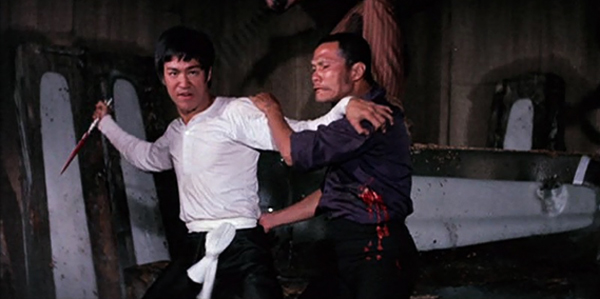
The Big Boss isn’t a bad movie, but, as I alluded to, it definitely suffers from low production values and a lack of focus. It is obvious that the film had a somewhat fraught production. On-set injuries, poor shooting conditions, a revolving door of crew members, including the director, and, at times, disagreements between Lee and Wei on the vision of the film all added up to make the end result a bit of a mess. The film’s first half gets started much too slowly, with the focus primarily on Hsu Chien rather than Cheng, perhaps a holdover from the original intention for the film to be a vehicle to escalate Tien’s existing popularity in Hong Kong. Using the narrative excuse that Cheng promised his mother that he would avoid violence, Lee’s character is largely brushed to the side while Tien gets all of the fighting scenes. While Tien grabs the spotlight, Lee plays out a mildly incestuous and totally unnecessary romantic hero side plot with his only female cousin, Chiao Mei (Yi). When Cheng finally breaks his vow to his mother and Lee gets to showcase some of his fighting skills, it’s very obvious that he is a much better martial artist than Tien, and it’s hard for me to accept not having enjoyed the clinic that Lee puts on in the film’s second half for the full runtime.

Unfortunately, even when Lee is allowed to fully showcase his kung fu, his skills are undercut by the film’s persistently bad editing. During fight scenes, Lee is rarely shot in full shot, instead his movements are implied by a series of quick cuts from insert shots and close-ups. The shooting angles are often disorienting, and the camera movements lack any fluidity making many of the fights featuring Lee difficult to really follow and enjoy. I’m sure that most of the jarring cuts in the film’s fight scenes were efforts to hide the fact that during production Lee was shooting through both illness and injury, but that doesn’t make the lack of any coherent flow or rhythm to the fight scenes any less obtrusive. Add to this the fact that the beginning of the film hardly features Lee in an action role, and The Big Boss is rather disappointing as a martial arts film, on the whole. Lee and Wei would correct some of these mistakes and turn out a much more enjoyable and consistent effort with their next film, but The Big Boss still has the marks of a partnership that is being felt out, and a star persona that is just beginning to emerge.

fists of fury 4

One of the factors contributing to my disappointment in rewatching The Big Boss might be the absolute terrible quality of the transfer on the DVD that I have in my collection. I can remember purchasing this DVD, which is essentially a decently-packaged bootleg from a foreign distributor, when I was about 19. Around that time, I started finding and purchasing very inexpensive copies of kung fu movies online, but the quality of the image and the presentation, in general, was highly variable. This movie is packaged as Fists of Fury, which was the incorrect title that The Big Boss was released under in America, hence its position here in the alphabetical list of my collection, and the disc contains no special features or booklet, just a poor quality copy of the official theatrical release cut of the film. It’s only audio track is the poorly dubbed English-language version, which I actually prefer for these types of old school kung fu movies, but it would be interesting to watch the film in its native language. I understand that by now there have been several remastered official home video releases of The Big Boss and Lee’s other Hong Kong films, so I would be interested to check out a better looking copy of the movie and see if it changes my opinion of it at all.
fists of fury 2

I don’t mean to paint The Big Boss in too negative a light, because it is still a pretty fun kung fu movie in its own right. Despite its shortcomings, fans of the genre will absolutely find plenty to enjoy about the movie. It checks off all of the correct campy boxes, features a few fun fights, and, obviously, it’s still a Bruce Lee movie. Lee’s relatively small body of major work remains the gold standard in martial arts films for many people, and it would be hard to argue with that sentiment. Lee was the perfect combination of skill, athleticism, and charisma to break martial arts into the mainstream in the West, and the building blocks of his style are on display here. One thing that I did think about when I was watching The Big Boss was how remarkable Lee’s progression as an actor and star was from this first feature to his later films, Way of the Dragon and Enter the Dragon. There are less than two years separating the Hong Kong release of The Big Boss and Lee’s untimely death, and to think that his career had progressed so quickly and positively in that time is incredible to me, especially having recently watched Enter the Dragon for this project. It’s hard to predict where Lee’s career would have gone after the success of that film, but his rise to fame started with The Big Boss, and even if it doesn’t feature Lee at the height of his powers, it’s worth at least a watch.

Enter the Dragon

Enter the Dragon (1973)

Dir. Robert Clouse

Written by: Michael Allin

Starring: Bruce Lee, John Saxon, Jim Kelly, Shih Kien


I’m not sure exactly when I first saw Enter the Dragon. It wasn’t the first movie starring Bruce Lee that I ever saw, nor was it my first foray into the kung-fu genre, but I do know that it made quite an impact on me at a fairly young age. For many people, Enter the Dragon stands as the high water mark of the classic era of kung-fu movies, and I don’t think that it’s a stretch to call it the most well-known mainstream martial arts film of all time. Lee’s star appeal was just beginning to break through in the United States, and Enter the Dragon was set to be his triumphant entryway into mainstream action filmmaking. However, Lee tragically passed away shortly before the film’s release, making Enter the Dragon the last film that he would live to complete. Though he left behind a relatively scant filmography, only starring in a handful of films, Lee has become synonymous with martial arts cinema, and is still one of the most widely recognized and celebrated martial artists to ever grace the screen. Instead of serving as a launching point into greater stardom, Enter the Dragon now serves as a reminder of Lee’s athletic ability, charisma, and viability as an action star.

enter the dragon 5

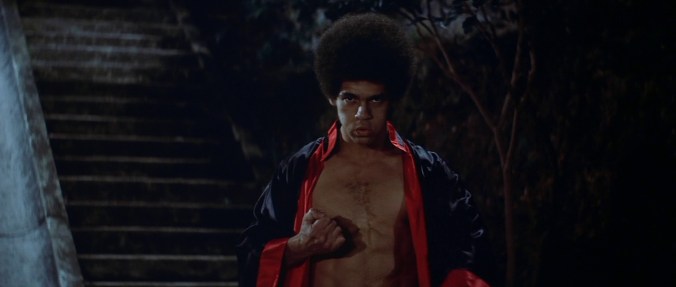
Enter the Dragon marks a diversion from traditional kung-fu narratives of the time, including significant Western influences and playing out something like a blend of a James Bond spy thriller and a traditional martial arts film. In the film, Lee (Lee) is approached by a British intelligence agency and is encouraged to enter into a martial arts tournament held on a mysterious island owned by Mr. Han (Kien), a suspected crime lord. While attending the tournament, Lee is to investigate Han’s compound and find evidence of his involvement with prostitution and drug trafficking. Lee agrees to attend the tournament after learning of his sister’s death at the hands of one of Han’s bodyguards, O’Hara (Bob Wall), and vows to avenge her death, as well as bring down Han’s crime syndicate. When he arrives on Han’s island, Lee meets Roper (Saxon), a gambling addict on the run from the mob, and Williams (Kelly), a Vietnam veteran on the run from the police. The three men are obviously the most skilled fighters in the tournament, and they quickly dispatch of their opponents, although each of them runs afoul of Han in some way for disobeying the rules of his island. By night, Lee infiltrates Han’s compound and discovers the extent of his smuggling operations, although he is captured by Han’s guards. Meanwhile, Han has tried to recruit Roper to his syndicate, but Roper refuses when he realizes that Han has murdered his friend Williams. The next day, Han orders Roper and Lee to fight each other, and when Roper again refuses to be used as Han’s pawn, a melee breaks out which leads to Lee pursuing and eventually killing Han in an epic fight. With Han defeated, Lee and Roper await the arrival of the British helicopters on their way to recover Han’s prisoners and clean up the last of his criminal operations.

enter the dragon 3

The influence of Enter the Dragon can’t be understated. The film was a box office and critical success, earning $25 million in American box office receipts alone, against a shoestring budget of less than $1 million.  As I mentioned, the film marked the real introduction of Western audiences to Hong Kong cinema and martial arts cinema, in general. Far from being just a martial artist, Lee served as a cultural ambassador and representative of Chinese philosophy for many American audiences who were unfamiliar with the tenets of martial arts. Without the success of Enter the Dragon, I really doubt that American audiences would have ever experienced the films of Jackie Chan, Jet Li, Donnie Yen, or scores of other martial artists who would emerge as key action stars both in Asia and in America in the years to come. The popularity of Enter the Dragon also kicked off a fervid interest in martial arts in America, with kids all over starting to take kung-fu and karate lessons, emulating their onscreen hero, and embracing the strength, hard work, and discipline that martial arts training instills in its adherents. Simply put, Enter the Dragon was one of the most culturally significant films of the 1970s.

As a film, Enter the Dragon is a joy to watch. Though it was shot on a limited budget and under unique constraints due to language barriers between the American and Chinese crews, as well as creative disagreements between Lee and screenwriter Michael Allin, the finished film is a thing of beauty. The setting of Han’s island is lush and vibrant, and his compound is a visually rich location that hints at the opulence that a life of crime can afford him. The film is perfectly paced, and though it is light on the exposition, it delivers on the promise of great action. Its espionage scenes are tense and exciting, underscored by a funky jazz score from one of the great film composers of the 1970s, Lalo Schifrin. The fight scenes, all of which were conceived of and choreographed by Lee, are shot impeccably, capturing the aggression and grace of the fighters perfectly. The film’s climactic showdown between Lee and Han, in which the pair eventually square off in a hall of mirrors is a stunning cinematic achievement. The precision with which the scene must have been filmed is hard to fathom, and I still don’t know how the crew managed to pull it off. It’s one of the most memorable fight scenes in the martial arts genre, and the image of hundreds of mirror images of Bruce Lee repeating into the background as he stalks Han through the mirrored room is one of the genres indelible calling cards.

enter the dragon 7

Kelly and Saxon certainly hold their own in their fight scenes, but Lee is the obvious star of the show. His lithe physicality is on display throughout the film, and his fight scenes capture the effortless way in which he cycles through movements, countering and striking with such ease and skill that he seems imbued with an innate sense of placement and momentum that the other martial artists simply don’t have. More than his obvious physical prowess, which had been on display in his other films, Enter the Dragon gave Lee the chance to introduce the philosophy behind his martial arts to the Western world. Particularly early in the film, Lee takes the opportunity to expound upon the ways in which his martial arts practice emphasizes living a balanced and harmonious lifestyle. Lee saw his martial arts as a form of self-expression, and his journey in life as one of constant self-improvement and of increasing the knowledge of self. Though much of the content relating to Lee’s philosophies and to Chinese philosophy, in general, was excised from the original American theatrical cut of the film, these scenes were reintroduced to later home video releases, and I think that the film is better off for it. If Enter the Dragon is to be seen as Lee’s magnum opus, it must contain at least some of the revolutionary thinking that he espoused and that ran as an undercurrent to his martial arts.

enter the dragon 4

Though it isn’t my absolute favorite martial arts movie, or my favorite Bruce Lee movie (that’s Way of the Dragon, which I no longer own), Enter the Dragon is a classic, and an interesting look at what might have been had Lee lived longer and continued making films in Hollywood. Lee’s impact on the action film scene of the 1970s was seismic, launching a kung-fu craze that lasted long after the release of this film and, of course, long after his untimely death. The film is often imitated, but never duplicated, and it serves as a perfect entry point for the uninitiated into classic kung-fu films. It has all the campiness and action that fans of the genre are looking for, but it’s also a film that is clearly grounded in Lee’s unique philosophical viewpoint. Lee’s star burned so brightly and his legend grew so outsize after American audiences got a taste of his prowess in Enter the Dragon that the film’s director cobbled together the film Game of Death from outtakes and partial scenes that Lee had filmed before beginning work on Enter the Dragon. Though his image and reputation have often been traded on in the decades since his death, mostly to diminishing returns, such is the quality and intensity of Lee’s small filmography that he will be forever seen as an action film legend. Lee was already a star by 1973, but when Enter the Dragon was released, he became an icon.